Windhoek, Namibia, 10 November 2026 (ECA) – Southern Africa's economies are showing encouraging signs of macroeconomic stabilisation, with growth recovering and inflation easing across much of the subregion. However, the region has yet to achieve the structural transformation needed to generate sufficient jobs, diversify production and build long-term economic resilience, according to a report presented at the Joint Session of the Intergovernmental Committee of Senior Officials and Experts (ICSOE) for Eastern and Southern Africa.
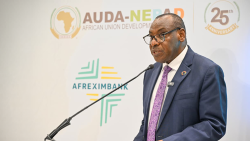
The findings were presented by Mzwanele Griffiths Mfunwa, Economic Affairs Officer at the United Nations Economic Commission for Africa Subregional Office for Southern Africa (ECA SRO-SA), during discussions on economic and social conditions in Southern Africa.
"The central message of this year's report is clear: macroeconomic stabilisation in Southern Africa is taking hold, but it has not yet gained sufficient traction to drive the structural transformation needed to create opportunities, particularly for young people entering labour markets across the region," said Mfunwa.
The presentation formed part of ICSOE 2026 discussions under the theme,"Bridging Eastern and Southern Africa: Connectivity, Trade and Investment for a More Integrated Continent."
Growth Recovers, but Challenges Persist
According to the report, economic growth across the eleven Southern African countries covered by ECA SRO-SA increased from 2.6 per cent in 2024 to 2.8 per cent in 2025 and is projected to reach 3.6 per cent in 2026. Average inflation is expected to decline from 10.4 per cent in 2024 to 6.7 per cent in 2026, bringing most countries closer to regional convergence targets.
Growth has been driven by strong performance in the services sector, favourable weather conditions that boosted agricultural production, rising commodity prices, expanding household consumption and investments in energy infrastructure. However, the report notes that much of this progress reflects improved external conditions rather than sustained gains in productivity and industrialization.
Performance across countries remains uneven. Zimbabwe recorded growth of 8.5 per cent in 2025, while Eswatini and Zambia grew by 5.6 per cent and 3.8 per cent, respectively. Conversely, Botswana's economy contracted by 0.7 per cent, Mozambique by 0.5 per cent, while South Africa expanded by only 1.1 per cent.
"Southern Africa is experiencing pockets of recovery, but not yet the broad-based productivity gains needed to transform economies and raise living standards across the region," Mfunwa said.
Industrialization Remains the Missing Link
A key message of the report is that macroeconomic stability alone will not create sufficient employment opportunities.
Manufacturing contributes only 5 to 15 per cent of GDP in most Southern African economies, while exports remain heavily concentrated in raw commodities. As a result, economic growth has not translated into enough decent jobs, particularly for young people. Youth unemployment remains nearly 11 percentage points above the continental average, posing a significant development challenge.
The report acknowledges efforts by governments to address youth unemployment through targeted initiatives but stresses that stronger industrial policies and regional value chains will be needed to create jobs at scale.
Debt, Trade and Industrial Development
While several countries have made progress in managing public debt, debt-servicing costs continue to absorb resources that could otherwise support investments in health, education and infrastructure. The report highlights Zambia's debt restructuring efforts under the G20 Common Framework and Mozambique's fiscal adjustment measures as examples of different approaches to managing fiscal pressures.
The report also underscores the importance of trade diversification and industrial development. Southern Africa possesses significant reserves of critical minerals essential for the global energy transition, including lithium and graphite. However, greater value addition is needed to ensure that the benefits of these resources remain within the region.
"Mineral booms are not the same as industrialization. If countries continue exporting raw materials without adding value, many of the jobs, technologies and economic benefits will be created elsewhere," Mfunwa warned.
Regional Integration Key to Resilience
The report calls for strengthened regional cooperation through industrial value chains, energy connectivity and the effective implementation of the African Continental Free Trade Area (AfCFTA). It identifies geopolitical tensions, commodity-price volatility, climate-related shocks and slower growth in South Africa as key risks to the subregion's outlook.
To address these challenges, ECA recommends policies that promote economic diversification, mobilize domestic resources, support industrialization and place job creation at the centre of development strategies.
Concluding his presentation, Mzwanele Griffiths Mfunwa emphasized that the success of economic reforms should ultimately be measured by their impact on people's lives.
"Macroeconomic stability deserves recognition, but stability will be durable only if it is used to build productive capacity, diversify trade and create opportunities for young people. The true measure of success will be stronger and more resilient economies that deliver incomes, livelihoods and jobs."
The ICSOE 2026 meeting continues in Windhoek with discussions focused on connectivity, trade, investment and regional integration between Eastern and Southern Africa.
For media inquiries
Mr. Didier Habimana
Communication Officer
United Nations Economic Commission for Africa
Subregional Office for Eastern Africa
habimanad@un.org
Ms. Lavender C. Degre
Communication Officer
United Nations Economic Commission for Africa
Subregional Office for Southern Africa
lavender.degre@un.org
Issued by:
Offices for Eastern and Southern Africa
United Nations Economic Commission for Africa