
Context and Background
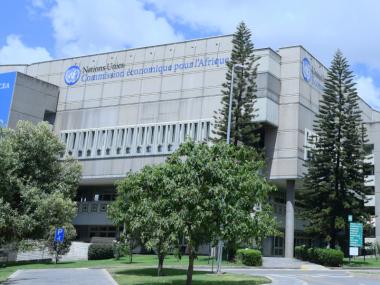
The United Nations Economic Commission for Africa (ECA) through the African Land Policy Centre (ALPC) his implementing a project aimed at strengthening land governance in Africa with targeted interventions in i) curricula development; and ii) training programmes on land governance; iii) research and knowledge exchange; iv) policy dialogue and advocacy to support reforms in the land sector. As part of the project, ALPC established the Network of Excellence on Land Governance in Africa (NELGA) bringing together over 70 universities coordinated by regional NELGA nodes re in Central Africa (Yaoundé 1 University, Cameroon); Eastern Africa (Ardhi University, Tanzania); Northern Africa (Institut Agronomique et Veterinaire Hassan II, Morocco); Southern Africa (Namibia University of Science and Technology, Namibia); and Anglophone West Africa (Kwame Nkrumah University of Science and Technology, Ghana) and Francophone West Africa (Gaston Berger University, St Louis, Senegal). The University of Western Cape (PLAAS) is a Technical Node promoting teaching and research on political, social and economic aspects of land governance. The project implemented in partnership and supported by the German government though a Declaration of Intent (DoI) signed in 2014 between the ECA, Worldbank and BMZ. A subsequent financing agreement signed between the ECA and the GIZ forms the basis for implementation.
The basis of the above project which is supported by the German government though a technical partnership with GIZ is the 2009, Declaration on Land Issues and Challenges in Africa adopted by the AU Heads of State and Government. The Declaration committed African governments to improve land governance.
Recognizing the complexity of the contemporary land governance industry, ALPC undertook research to determine gaps in the training of land professionals. The research findings revealed that although the curricula currently used for training land professionals have served the continent to some extent, there are key gaps that need to be filled in order to address the complex land tenure systems on the continent and the growing calls by industry for relevance and appropriateness. As a result, ALPC developed the Guidelines for the Development of Curricula on Land Governance in Africa to support Curricula review on land governance in Africa.
Documents