
58TH SESSION OF THE CONFERENCE OF AFRICAN MINISTERS OF FINANCE, PLANNING AND ECONOMIC DEVELOPMENT
Theme:
Growth through innovation: harnessing data and frontier technologies for the economic transformation of Africa
Statement
By
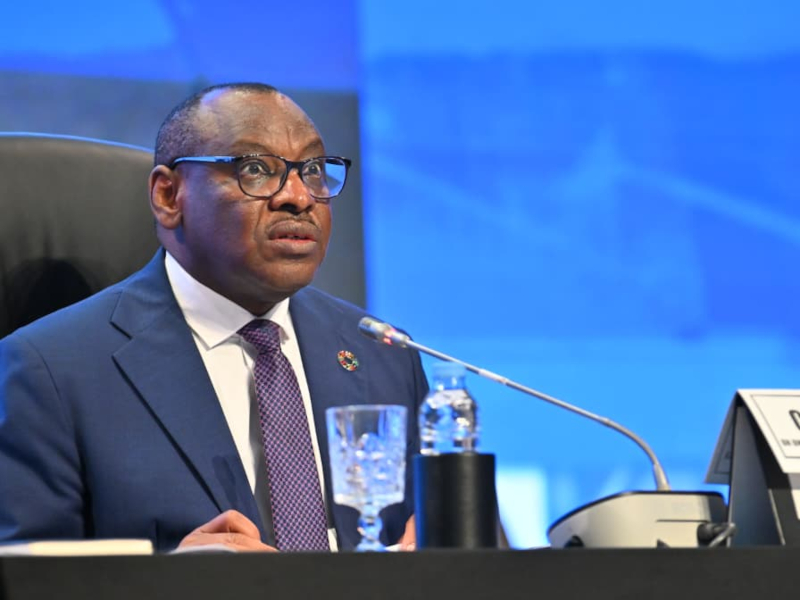
Mr. Claver Gatete
United Nations Under-Secretary-General and
Executive Secretary of ECA
2 April 2026,
Tangier, Morocco
H.E. Aziz Akhannouch, Prime Minister of the Kingdom Morocco;
H.E. Nadia Fettah, Minister of Economy and Finance, Morocco & Chair of the outgoing Bureau;
H.E. Mahamoud Ali Youssouf, Chairperson of the African Union Commission;
Excellencies, Ministers of Finance, Planning and Economic Development;
Distinguished Heads of Delegations and Representatives of Partner Institutions;
Distinguished Delegates;
Ladies and Gentlemen:
It is a great honour to welcome you to the ECA’s 58th session of the Conference of African Ministers of Finance, Planning and Economic Development, convened here in Tangier under the theme: “Growth through innovation: harnessing data and frontier technologies for the economic transformation of Africa.”
Allow me to begin by conveying our deep appreciation to His Majesty King Mohammed VI for his continued leadership and commitment to Africa’s development and regional integration.
I also wish to express my profound appreciation to His Excellency Prime Minister Aziz Akhannouch for gracing the opening of this session.
Your presence here today, Excellency, sends a powerful signal of Morocco’s enduring dedication to regional cooperation, innovation and inclusive growth across our continent.
I extend sincere thanks to the Government and people of Morocco for their warm hospitality, and to H.E. Nadia Fettah, Chair of the Outgoing Bureau, for her commendable leadership over the past year.
I also acknowledge the strong partnership of the African Union Commission, the United Nations system and our development partners, whose collaboration continues to reinforce the importance of this Conference.
In particular, I thank the AUC Chairperson for his presence and the importance he attaches to African development issues.
Excellencies,
We are meeting at a time of heightened global uncertainty.
Our world has faced crises before – from the energy shocks of the 1970s, to the global financial crisis in 2008 and the COVID-19 pandemic.
But today’s context is particularly concerning.
The evolving conflict in the Middle East is already affecting energy markets and trade flows, with implications that may be even more far-reaching.
For Africa, this is not a distant development. It is a direct economic lifeline.
Rising energy prices, tighter financial conditions and disrupted trade routes will transmit quickly into our economies, testing already constrained fiscal space and exposing structural vulnerabilities.
But even within these disruptions, new possibilities are beginning to emerge.
As traditional trade routes through the Red Sea and Strait of Hormuz become constrained, Africa is rapidly repositioning itself as a global logistics corridor, with Kenya’s Lamu Port and ports of Durban and Maputo recording unprecedented traffic surges.
Furthermore, Ethiopian Airlines is becoming a critical air-bridge between Asia and Europe, and Nigerian oil revenue also registered windfall.
Indeed, in this evolving global landscape, one fact is becoming increasingly clear: it is those countries that can translate innovation into productivity, competitiveness and wealth that will gain a decisive competitive edge.
Where, then, does Africa stand? And more importantly, where must it position itself?
Africa’s growth prospects are encouraging, with projections of around 4% in 2026. But growth without transformation is growth without traction.
Too often, it has not delivered the structural change, productivity gains or large-scale employment our people need.
Too often, our economies have expanded without fundamentally changing what they produce, how they compete, or where value is captured.
At its core, the transformation before us is not simply technological; it is macroeconomic.
Are our fiscal choices, debt strategies and investment priorities aligned with long-term transformation?
In many of our countries, limited fiscal space, rising debt service obligations and high borrowing costs constrain investment.
This makes it essential not only to increase investment, but to improve its quality by targeting sectors that drive productivity, diversification and resilience.
Macroeconomic policy must therefore move beyond short-term stabilization to actively support transformation, and ensure that public investment, financing strategies and debt management are aligned with development outcomes.
And this is why innovation must be approached as part of a broader, integrated policy framework that links finance, technology and structural change.
The key issue is not access to technology per se; it is its effective diffusion into productive sectors.
There is, of course, important progress to build on.
For example, in Kenya, Rwanda and Ghana, digital platforms and fintech innovations are expanding access to finance; in Botswana, smart agriculture technologies are improving productivity and climate resilience; and in Morocco, Namibia and South Africa, investments in renewable energy and green hydrogen are opening new pathways for industrial development.
Yet progress remains uneven.
Without decisive action, we risk digital marginalization, widening productivity gaps and continued externalization of value from Africa’s economies.
At the centre of this conversation lies a fundamental question: who creates value from our data, our innovation and our markets – and who captures it?
Despite the expanding digital activity across the continent, a significant share of value – whether in the form of the revenues generated from our data, the ownership of algorithms and intellectual property, or the profits from digital platforms – continues to accrue elsewhere.
This must change.
It requires deliberate policies to ensure that African countries retain and capture such value from their data through effective governance frameworks, regulatory systems and digital taxation mechanisms.
The question, then, is not whether Africa can transform; but how fast and how deliberately we are prepared to act.
Allow me, therefore, to highlight four interlinked priorities that can help Africa to harness innovation and frontier technologies for lasting economic transformation.
First, Africa must invest in the foundations of a modern economy.
Without reliable energy, robust digital connectivity and strong data infrastructure, innovation will be constrained and transformation, no matter how well envisioned, will remain out of reach.
We must power, connect and digitize our economies, because no country can compete in the twenty-first century on analogue foundations.
The current global geopolitical situation actually underscores why energy security and data sovereignty are strategic imperatives.
This requires accelerating infrastructure projects, including those under the Programme for Infrastructure Development in Africa led by AUDA-NEPAD, and prioritizing regional data systems.
Second, we must invest decisively in people.
Our education and skills systems must align with the demands of a rapidly evolving, technology-driven economy, so that Africa’s youth are not merely participants in change, but leaders of it.
They must be equipped to design, adapt, produce and scale solutions that respond to Africa’s realities.
Third, no country can transform in isolation.
Africa must therefore act collectively through the effective implementation of the African Continental Free Trade Area.
Scale matters.
In this respect, the AfCFTA provides a platform to expand markets, enable firms to operate across borders, leverage systems, such as the Pan-African Payment and Settlement System (PAPSS) for cross-border payments in local currencies, and accelerate the diffusion of innovation across the continent.
Fourth, we must confront the question of financing – squarely and strategically.
Transformation at scale requires financing at scale.
This means strengthening domestic resource mobilization, crowding in private investment and deploying innovative instruments such as blended finance and debt-for-climate swaps.
It also requires addressing the high cost of capital and the risk premiums that continue to constrain African economies, as well as the climate–debt nexus that constrains sustainable investment.
Excellencies,
The decisions we make will determine whether Africa builds resilient and diversified economies that create decent jobs and compete effectively in the global economy.
They will determine whether our young population becomes a demographic dividend – or a missed opportunity.
This Conference provides a critical platform to define a path forward. The moment before us does not call for incremental change; it calls for transformation at scale.
And the Economic Commission for Africa is ever ready to support you in this endeavour as we work collectively, decisively and with urgency.
I thank you for your kind attention.