
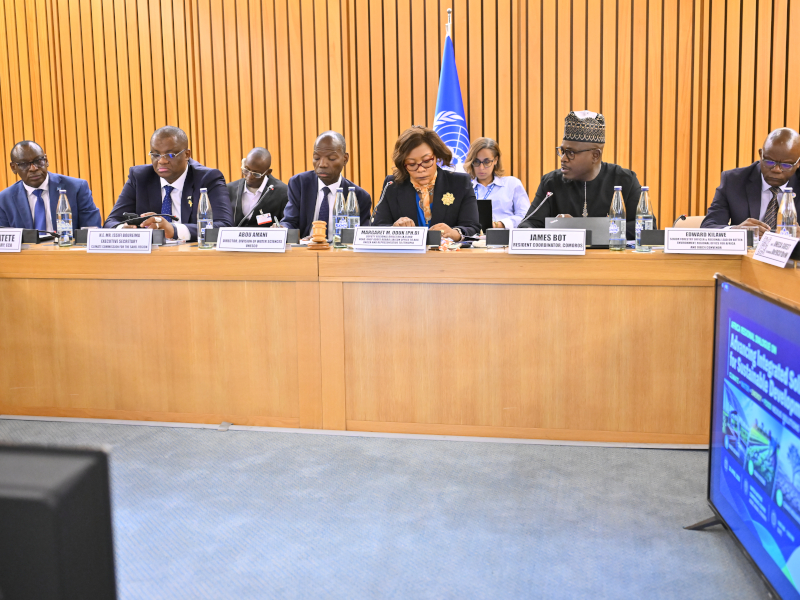
Addis Ababa, 28 April 2026 - The United Nations Resident Coordinators in Africa convened in Addis Ababa to discuss strategies to reduce reliance on external partners and enhance domestic resource mobilisation to facilitate sustainable development.
The meeting, organised by the United Nations Economic Commission for Africa (ECA), the UN Development Coordination Office, and the African Union Commission (AUC), on 27 April, was a pre-event for the Africa Regional Forum on Sustainable Development, focused on the African Union's Domestic Resource Mobilization Strategy.
The strategy has become vital for financing Africa's development goals, including the Second Ten-Year Implementation Plan and the 2030 Agenda. As financing gaps and debt vulnerabilities increase, African nations need to mobilize domestic resources to achieve sustainable development.
Discussions at the meeting covered strategies to improve tax policy and administration, address illicit financial flows, and strengthen public financial management—all crucial for enhancing domestic resource mobilization to support development efforts.
The role of UN Resident Coordinators was also highlighted, emphasising their importance in assisting governments in aligning national financing frameworks with Agenda 2063 and the Sustainable Development Goals (SDGs).
Key challenges hindering African countries from mobilizing resources for development were identified, including structural and political economy factors, fragmentation within development networks, and institutional weaknesses.
To tackle these issues, the meeting proposed six strategic priorities: reframing development through a political economy lens, enhancing African financial sovereignty, deepening regional integration, shifting financial resources toward transformative initiatives, strengthening tax administration systems, enhancing service delivery, and improving institutional coordination.
The discussion also stressed the need for African countries to utilise development banks and national institutions to mobilise domestic resources effectively. The AUC and ECA indicated strong commitment to supporting the implementation of these recommendations.
Mr Said Adejumobi, Director of Strategic Planning, Oversight and Results Division at ECA, representing the ECA Executive Secretary, underscored the crucial role of domestic resource mobilisation, noting that Africa's previous 10-year plan fell short due to insufficient funding.
Ms. Botho Kebabonye Bayendi, AU Director of Strategic Planning and Delivery, said that the AU and UN share a framework for integrated financing, focusing on domestic resource mobilization for Africa’s vision. She urged UN Resident Coordinators to support governments and improve coordination to turn commitments into results.
The outcomes and recommendations aim to guide regional policy decisions and development initiatives, emphasizing Africa’s commitment to advancing its development agenda via strong domestic resource mobilization.
Issued by:
Communications Section
Economic Commission for Africa
PO Box 3001
Addis Ababa
Ethiopia
Tel: +251 11 551 5826
E-mail: eca-info@un.org