
Introduction
Infrastructure and public-private partnerships (PPPs) remain central to Africa’s development agenda. Yet, across the continent, implementation has not advanced at the scale or pace required. Persistent constraints—including limited project-preparation capacity, affordability pressures in public service delivery, institutional and technical capacity gaps, and the need to adapt PPP legal and contractual frameworks to African socio-economic realities—continue to impede effective delivery.
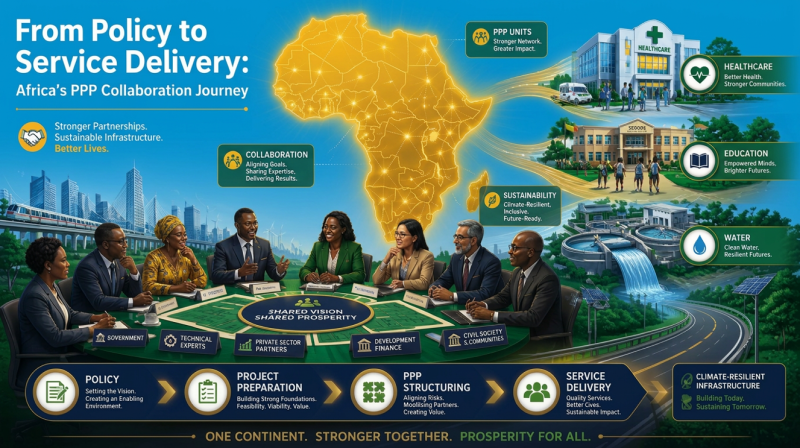
Against this backdrop, moving from policy ambition to effective service delivery has become increasingly urgent. This requires stronger collaboration and practical dialogue among governments, PPP practitioners, development partners and technical experts to improve the preparation, structuring and delivery of social-sector PPPs.
In 2024, the African Legal Support Facility (ALSF), the United Nations Economic Commission for Africa (UNECA) and the African Development Bank (AfDB) convened the inaugural African PPP Units Forum. The event brought together more than 30 PPP units from across the continent, along with key PPP stakeholders, to exchange knowledge, discuss implementation challenges, share good practices, and promote collaboration under the theme “Developing and Implementing Climate-Resilient PPPs for Africa” (the “2024 Forum”).
The 2024 Forum aimed to strengthen collaboration on strategies for implementing climate-resilient PPP projects. Discussions underscored the importance of integrating climate resilience into PPP policy frameworks, project preparation, and infrastructure design.
The second Annual PPP Units Forum (the “2026 Forum” or the “Forum”) will convene PPP units to advance practical solutions to improve the preparation, structuring, and implementation of social-sector PPPs, with the aim of translating policy ambition into tangible improvements in access to essential services.
The Forum will also build on the outcomes and recommendations of the 2024 Forum by assessing progress made since the inaugural event and identifying priority areas for continued collaboration and practical implementation.