
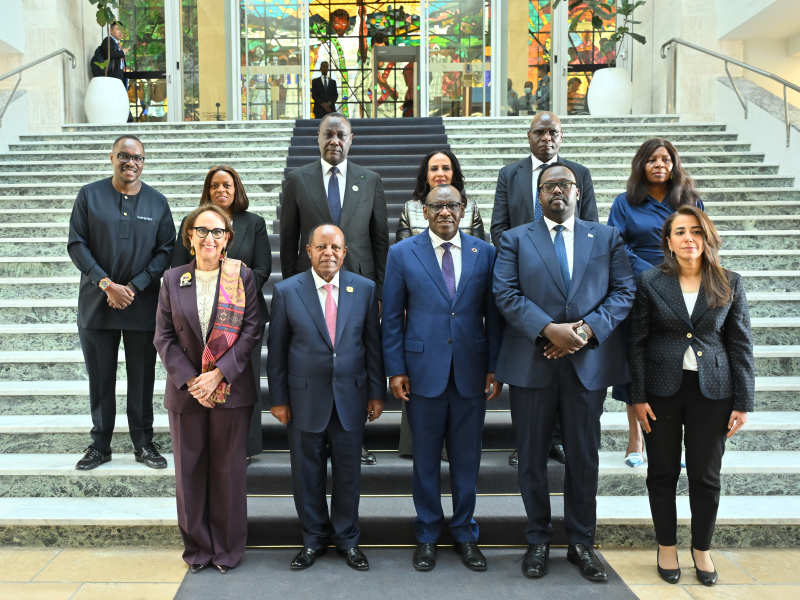
Addis Ababa, 16 February 2026 (ECA) - The 9th Africa Business Forum organized by the United Nations Economic Commission for Africa, opened in Addis Ababa, Monday, with resounding calls for investments in Africa’s ongoing transformation. Held in the iconic Africa Hall, heads of state, captains of industry and young entrepreneurs from across the continent gathered on the theme, Financing Africa’s Future, against the backdrop of mounting global uncertainty with slowing growth, climate shocks, rising debt, and shifting supply chains.
Ethiopia’s President Taye Atske Selassie highlighted the country’s experience in creating jobs for youth through startups and innovation, urging action on agriculture transformation, youth and women-led startups and the need to fast-track AfCFTA integration to advance sustainable development. He underscored that Africa’s transformation is not an abstract idea or distant ambition; it must be visible in factories that hire, farms that add value, digital platforms that reach markets and creative industries that turn youth talent into human capital.
Somalia’s Deputy Prime Minister, Salah Ahmed Jama, highlighted his country’s transformational multi-pronged efforts underway, including a national ID system, holistic policies linked to education and industrial policy, market demands to create jobs from livestock and fisheries value chains that contribute 7 per cent to the country's economy, underpinned, he noted, by a silencing the guns agenda.
Executive Secretary Claver Gatete noted that as global capital becomes more selective and concentrated, scale, security and future markets are assured. “The question is not whether capital exists,” he stressed. “The real question is: where will the next engines of global growth emerge?”
With the world’s youngest workforce, accelerating urbanization, rapid digital adoption and expanding consumer markets, the continent is already undergoing a structural transformation anchored in the African Continental Free Trade Area (AfCFTA), which is creating a single market of over 1.5 billion people. Furthermore, from youth-led cocoa processing in Côte d’Ivoire, an integrated automotive value chain in Morocco, to Ethiopia’s expanding digital payments ecosystem, as evidence that Africa is beginning to export value, not just raw commodities.
But as noted by Gatete, millions of young Africans enter the labour market every year. If they find productive employment, Africa could become the growth frontier of the century, but if not, instability will increasingly globalize, turning a continental development challenge into a global economic stability concern.
Samalia Zubairu, President and Chief Executive Officer of the Africa Finance Corporation AFC and a key ABF partner, stressed that Africa’s transformation, suadding value to the Continent’s mineral endowments, must lead to jobs that match the talent of the youth on the continent. He called on governments to go beyond commitments but move towards measurable efforts in job creation and sustainable growth. We transform by
The Africa Development Forum is structured to mobilize capital at scale, convene governments, development finance institutions, institutional investors and innovators, and ensure accountability through tools such as a “jobs wall” commitment tracker for youth employment and enterprise development. Mr. Gatete proposed four strategic measures: scaling domestic capital and innovative financing instruments through digitized tax systems and blended finance; building stronger credit ratings and more credible African capital markets to lower borrowing costs; fully implementing the AfCFTA to unlock regional value chains and job-creating industrialization; and investing decisively in innovation, skills and data systems so that African youth can drive and benefit from the digital and green transitions.
“The core issue today is not aid versus trade, but the gap between risk perception and investment reality in Africa.”
With the continent poised to host the largest emerging workforce and consumer market of this century, he warned that the opportunity cost of not investing in Africa will soon exceed the perceived risk of doing so. “We can build industrial value chains, digital markets and green energy systems with Africa,” he said, “or confront migration pressures, supply disruptions and instability without Africa.”
Reaffirming ECA’s readiness to provide policy analysis, convening power and implementation partnerships, Mr. Gatete called for translating the Forum’s commitments into measurable outcomes that create jobs, scale enterprises and finance value chains across the continent.
Issued by:
Communications Section
Economic Commission for Africa
PO Box 3001
Addis Ababa
Ethiopia
Tel: +251 11 551 5826
E-mail: eca-info@un.org