Africa has been taking attendance, but it forgot to give the test
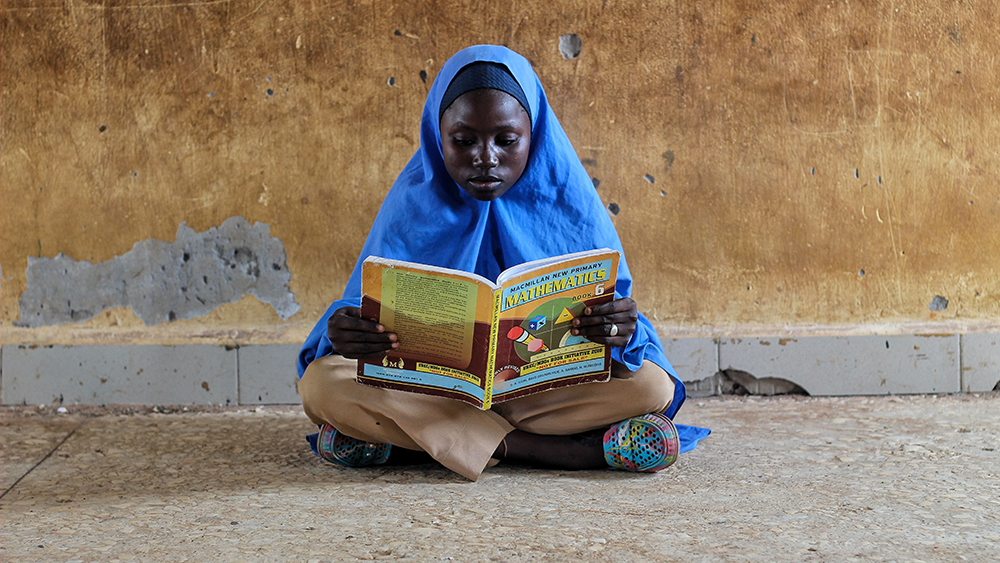
Imagine a student who does everything right.
She shows up. Every day, for twelve years. She sits in the classroom, completes the assignments, passes the exams, collects the certificate. By every official measure, she has been educated. The data confirms it. The government counts her. The international database records her. She is, statistically speaking, a success story.
Then she applies to a university abroad, or sits for a professional qualification, or walks into a job interview and discovers that twelve years of education did not give her what twelve years of education was supposed to give her. Not because she wasn't capable, not because she didn't try. But because the system that educated her was being measured on whether she arrived. Not on whether she learned.
This is not a story about one student. It is a story about what an entire continent has decided to count, and what it has quietly agreed not to.
Africa has reasonably good data on school enrolment. Across 54 countries, gross primary enrolment data stretches back to 1970. The most populated indicator in the entire education dataset has 2,291 data points. Countries can tell you, with real confidence, how many children walked through a school gate.
What they cannot tell you, with anywhere near the same confidence, is what happened after those children sat down.
ECA's latest statistical brief on education in Africa maps the full data landscape, from enrolment through completion to learning outcomes. The picture it reveals is not shocking because the data is fraudulent. It is shocking because the data becomes dramatically thinner the closer you get to the question that actually matters: are children learning?
Completion rate data, tracking whether children finish the education cycle they started, has 258 to 259 data points across the continent. Less than a quarter of what exists for enrolment. For some countries, the most recent completion data is more than a decade old. Eritrea, Libya, and Seychelles have no completion rate data at all.
And then there is reading proficiency. The measure that tells you whether a child can read at the level expected for their grade.
Across Africa, reading proficiency at primary level has 62 data points. From 31 countries. Over 10 years. At lower secondary level, the point at which foundational literacy should be consolidated, there are 11 data points. From 6 countries. Over 8 years.
Eleven. For a continent of 54 countries and hundreds of millions of school-age children. This is not an accident, but the accumulated result of measuring what is easiest to measure.
Enrolment data is straightforward. A school opens; children arrive, register is kept, the Ministry of Education aggregates the numbers. The UNESCO Institute for Statistics publishes them. The indicator updates regularly. Governments point to rising enrolment rates as evidence of progress and, for a long time, the world nods along.
Completion data is harder. It requires tracking cohorts of children across years, following them from entry to exit, accounting for dropouts and repetition rates, maintaining records across school transitions. It is expensive and requires institutional capacity that many systems don't have.
Learning outcome data is harder still. It requires standardised assessments, administered regularly, scored consistently, and analysed meaningfully. It requires not just that children sit in classrooms, but that someone goes in afterwards to find out what they absorbed.
The result is a dataset that tells a coherent story about access to education and a fragmentary, almost silent story about what that access is actually delivering.
As the brief puts it plainly: Africa's education data architecture is heavily focused on measuring access rather than learning and completion.
Which means that for decades, progress in African education has been assessed on the basis of a starting line. Not a finish line. Not the race itself.
Here is the quiet agreement that sits underneath all of this.
We asked for children to go to school. Here is proof that they went. Everything that happens after the gates close, whether they stay, whether they progress, whether they emerge literate and numerate and capable, that, the data suggests, is someone else's business.
The brief is arguing that we make it our business.
That the continent that has tracked school enrolment for over fifty years needs to now build the systems to track what enrolment produces. That reading proficiency data for 6 countries out of 54 at secondary level is not a gap, but an indictment. That a child who enters school at six and leaves at nine has not received primary education, regardless of what the enrolment register says.
Because the problem is not only that Africa's education data is thin where it matters most. The problem is that thin data produces a false sense of progress. And a false sense of progress is the most dangerous condition a system can be in, because it removes the urgency to change.
Consider what this means for a continent where 41 percent of the population is under fifteen. Africa's demographic dividend, the economic potential of a young, growing workforce, is one of the most cited arguments for investment in the continent. But a dividend requires a return. A generation of young people who attended school without acquiring foundational literacy and numeracy does not enter the labour market as an asset. It enters with a skills gap that employers cannot fill and workers cannot explain, because the system that certified them never checked what they actually learned. The result is a mismatch that plays out quietly in every hiring decision, every training budget, every young person who cannot access the job the economy needs them to do.
Getting children into school is not a trivial achievement. In contexts of conflict, poverty, distance, and gender discrimination, it is a genuine and hard-won gain. But access is not the destination. It is the beginning of a journey that the data, right now, largely stops tracking once it starts.
The brief is asking for something specific: invest in learning assessments that are regular, nationally owned, and standardised. Strengthen the systems that track completion alongside enrolment. Integrate school data with population data so that the more than 100 million children who never enrolled are not invisible by design. And publish it all openly. Not as tables in reports that sit on ministry shelves, but as live, accessible evidence that governments, parents, and policymakers can actually use.
None of this is technically impossible. It is a question of what a system decides to measure and therefore what it decides to be accountable for.
The student who shows up every day for twelve years deserves more than a certificate that the system never verified. She deserves a system that noticed whether she was learning.
And the continent deserves data that can tell the difference.
This blog draws on findings from ECA's statistical brief: "Education Statistics in Africa: Status and Implications for Policy Discussion" (ECA/ACS/07/2026), published July 2026, African Centre for Statistics, UNECA. Education.pdf
Read our companion pieces in this series: "Africa Doesn't Have a Poverty Problem. It Has a Measurement Problem." and "Africa's Economy Is Growing. Depending on Which Spreadsheet You're Reading."
AUTHORS
