Antalya, Türkiye, 17 November 2026 (ECA) – African island states have taken a further step towards strengthening regional cooperation on climate resilience with the launch of the regional phase of the RESIslands Project at the Africa Pavilion during COP31. The launch was accompanied by the signing of the African Island States Climate Commission (AISCC) Mutual Cooperation Agreement by Mauritius and Madagascar, bringing the number of signatories to seven of the Commission's nine member states.
The regional launch was officiated on 16 November by the Honourable Marie-May Jeremie, Minister for Environment, Climate, Energy and Natural Resources of Seychelles, in her capacity as Chair of the AISCC. It brought together ministers and heads of delegation from the nine AISCC member states, the Secretary General of the Indian Ocean Commission, Dr Ibrahim Norbert Richard, and the Deputy Executive Secretary of the United Nations Economic Commission for Africa (ECA), Dr Hanan Morsy.
“The African island states are separated from the continent by water, but never by purpose,” said Minister Jeremie, highlighting the shared climate vulnerabilities facing the nine member states.
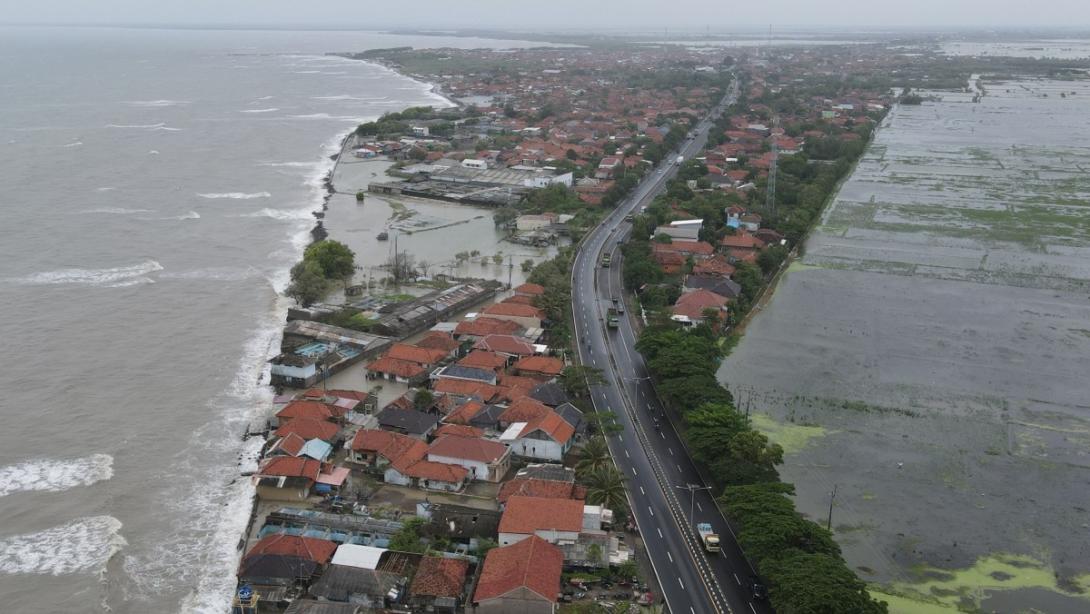
She noted that rising sea levels, increasingly severe storms, coastal erosion, water shortages, cyclones and flash floods are already affecting communities across African island states.
“These are not projections for us. They are the conditions in which our communities plan, build and recover,” she emphasised.
The RESIslands Project, a USD 4.95 million initiative financed by the Green Climate Fund (GCF) and implemented by ECA in partnership with the AISCC, seeks to strengthen the capacity of African island states to anticipate, assess and respond to climate risks.
Across the nine member states, the project will support stronger institutional frameworks, improved early warning systems, harmonised climate risk data and the development of pipelines for climate-resilient investments.
Following national launches in Equatorial Guinea, Seychelles, Comoros and Mauritius, the regional launch marks a further step towards coordinated implementation across all nine AISCC member states.
The signing of the AISCC Mutual Cooperation Agreement by Mauritius and Madagascar further reinforced this regional commitment. As the sixth and seventh signatories, the two countries joined other members in advancing cooperation on shared climate priorities. Both delegations also commended Seychelles for its leadership of the Commission and the RESIslands Project.
Strengthening access to climate finance and regional resilience
The launch featured a high-level panel on climate finance, resilience and climate action, bringing together Mr Justin Prosper of Seychelles; Mr Casimiro Jorge Sanca, Director of the Environment Fund at Guinea-Bissau's Ministry of Environment and Biodiversity; Dr Ibrahim Norbert Richard, Secretary General of the Indian Ocean Commission; and Dr Hanan Morsy, ECA Deputy Executive Secretary.
Discussions focused on the persistent barriers African small island developing states face in accessing affordable and concessional climate finance, despite their disproportionate exposure to climate-related risks.
Panellists underscored the importance of the Multidimensional Vulnerability Index and financing eligibility criteria that go beyond GDP to better reflect the structural vulnerabilities of island economies.
They also highlighted the potential of the AISCC Regional Co-Investment Platform to support a coordinated, programmatic pipeline of climate-resilient investments, moving beyond fragmented national approaches towards stronger regional cooperation.
The discussions further highlighted early progress under RESIslands, including the training of an initial cohort of 20 practitioners from eight member states in geoinformation and multi-hazard risk assessment. The training aims to strengthen national technical capacities to generate and use climate risk information for planning and decision-making.
As the first flagship project of the AISCC, RESIslands provides a regional framework for strengthening climate preparedness, institutional capacity and cooperation among African island states.
The project runs through December 2027.
Issued by:
Communications Section
Economic Commission for Africa
PO Box 3001
Addis Ababa
Ethiopia
Tel: +251 11 551 5826
E-mail: eca-info@un.org