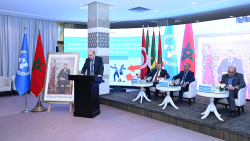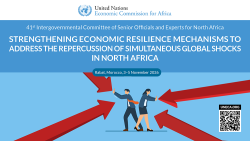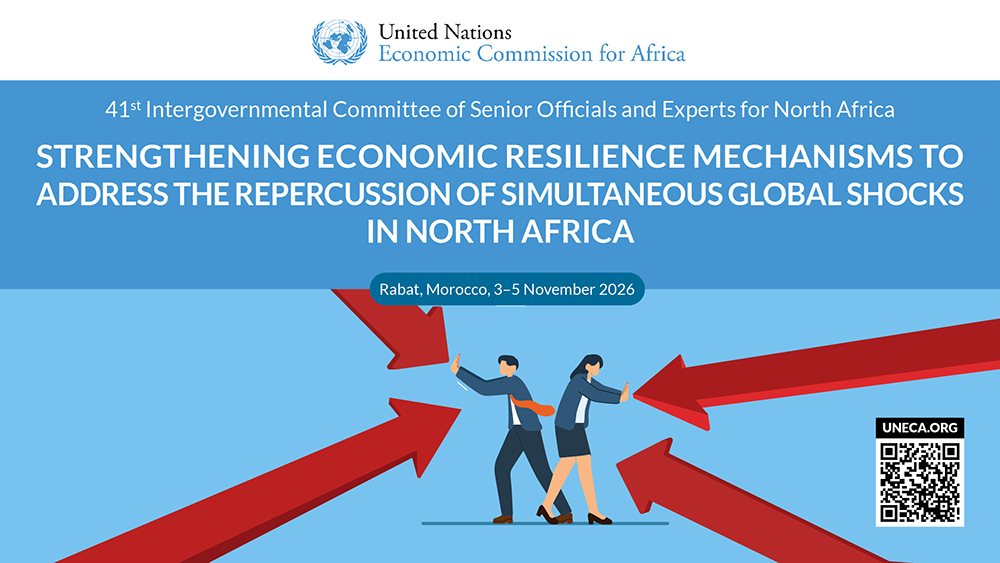
Rabat (Morocco), 3 November 2026 (ECA) –The ECA Office for North Africa kicked off today its 41st session of the Intergovernmental Committee of Senior Officials and Experts (ICSOE) under the theme: “Strengthening economic resilience mechanisms to address the repercussion of simultaneous global shocks in North Africa.”
A statutory deliberative body of the ECA, the ICSOE will review and discuss the subregion’s economic and social developments, progress on the implementation of regional and global development agendas, and the Office’s achievements in the past year, and set its work programme and strategic orientations for the year ahead. It will also provide country representatives and experts with a platform to share experiences and best practices in mitigating the impact of multiple and overlapping shocks and in strengthening national resilience to support long term economic transformation.
On 4 November, an ad-hoc expert group meeting will delve deeper into the topic. It will focus on how member countries can incorporate resilience and strategic foresight into their development strategies and practices, and on the tools policymakers can use to develop resilient societies and economies.
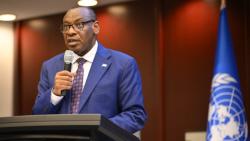
“Looking ahead, we aim to help member States turn resilience from a concept into policy and institutional practice. In concrete terms, we propose to strengthen fiscal and debt resilience; make remittances and diaspora resources work harder by deepening the national frameworks and tools in Egypt and Tunisia and sharing lessons across the subregion and the continent; build productive and diversified economies and developing a resilient-growth toolkit, and translate it into policy pathways and country-level projects, while engaging member countries and African negotiators on the climate debt haircut proposal ahead of discussions on debt, climate finance and reform of the international financial architecture,” said Nassim Oulmane, newly appointed Director of the ECA Office for North Africa.
Since 2020, North Africa has faced pandemics, the effects of the war in Ukraine, rising food, fuel and fertiliser prices, climate extremes, tighter global financial conditions and, more recently, the economic impact of disruptions around the Strait of Hormuz. The cumulative cost of these shocks to North African economies amounts to tens of billions of dollars.
North Africa has shown resilience, recording its strongest GDP growth in more than a decade: 4.6 per cent in 2025, compared with 1.1 per cent in 2024. However, the recovery remains uneven. The average fiscal deficit stood at 9.2 per cent of GDP in 2025, debt service absorbed about 20 per cent of export earnings, compared with 10 to 13 per cent before 2020, and social conditions remained equally challenging.
Africa’s financial sovereignty has become unavoidable. This will lead our continent towards greater financial independence and self-reliance. Tunisia is fully convinced that: “Africa’s potential exceeds the challenges it faces”. Support by partners such as ECA has a key role to play in transforming this potential into development, said Tarek Bouhlel, Director General of African Cooperation at the Tunisian Ministry of Economy and Planning and outgoing chairman of the ICSOE.
“The General Secretariat of the Arab Maghreb Union recognises the importance of addressing shifts related to climate change, food security, the energy transition and technological innovation. These challenges require stronger regional coordination and the sharing of expertise on solutions that balance economic growth, the protection of natural resources and the improvement of citizens’ living conditions,” said Tarek Ben Salem, Secretary General of the Arab Maghreb Union, in a statement read on his behalf.
Based in the Kingdom of Morocco since 1963, the United Nations Economic Commission for Africa’s Office for North Africa supports seven countries: Algeria, Egypt, Libya, Mauritania, Morocco, Sudan, and Tunisia. Its goal is to contribute to enhancing the environment for accelerated and inclusive growth and sustainable development in North Africa.
Recommendations from the 41st ICSOE and Expert group meeting will be submitted to the 59th Session of the Economic Commission for Africa and Conference of Ministers of Finance, Planning and Economic Development (COM2027) scheduled to take place in Addis Ababa, Ethiopia, from 17 to 23 March 2027, under the theme “Shaping the future of work in Africa: youth employment.”
Note to editors
For more information about these meetings, please visit https://www.uneca.org/forty-first-session-icsoe-north-africa. To request an interview with our experts, please email filali-ansary@un.org or a WhatsApp message to: (+212) 673 734 462.
High resolution, copy-right free photos of the event will be provided on demand and through the ECA Flickr page.
Issued by:
Communications Section
Economic Commission for Africa
PO Box 3001
Addis Ababa
Ethiopia
Tel: +251 11 551 5826
E-mail: eca-info@un.org