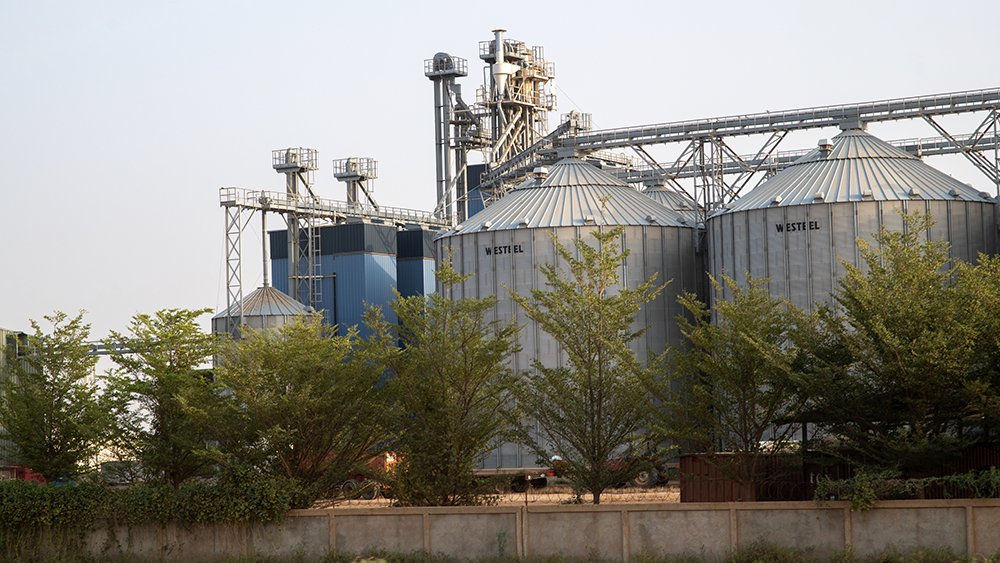
Yaoundé, 27 November 2026 (ECA) — Gabon aims to make its domestic food market the primary outlet for its agro-industrial sector. With support from the Subregional Office for Central Africa of the United Nations Economic Commission for Africa (ECA), it is developing a framework to guide investment under its 2026–2030 Food Systems Transformation Plan (PTSA).
The framework is designed to help the government and businesses decide which value chains and equipment to finance in each production area, based on available crop supplies and buyer demand.
According to a government estimate published in June 2026, imports account for 70–80% of Gabon’s food consumption and cost about 500 billion CFA francs a year. Local processors need reliable supplies of raw materials at competitive prices to gain market share. Maize and soybeans, two strategic crops under the PTSA, illustrate that requirement.
Experts from government ministries, business representatives, development partners and researchers will review a report on approaches to transforming Gabon’s agriculture in Libreville on 3–4 December 2026.
Their recommendations are expected to clarify how shared equipment should be financed and managed. Tracking the volume of output processed locally, farm incomes and jobs created could then help channel financing into the value chains offering the greatest potential for Gabon’s economy.
Agricultural growth poles, or agropoles, and agribusiness hubs are among the options being examined.
“Gabon has the potential to build an advanced agro-industrial sector. We are putting forward models that have proved their worth around the world. Amid considerable global uncertainty, the challenge is to ensure that agricultural transformation does not impose additional burdens on the government and citizens,” said Adama Ekberg Coulibaly, Chief of the Office’s Subregional Initiatives Section.
An ECA study on import substitution and quality infrastructure in Central Africa, covering rice, maize, meat and fish, shows how low-priced imports, sometimes subsidized, can limit market opportunities for local producers.
Food imports also draw on foreign exchange in the Central African Economic and Monetary Community (CEMAC). A simulation published by the Bank of Central African States estimates that the bloc’s pooled foreign exchange reserves would have been about 440 billion CFA francs higher if member countries had been able to source all their beef and fish within the region in 2019.
“Gabon’s leadership has chosen to join the subregion’s drive toward import substitution. We are supporting this ambition so that Gabon can become a model of successful structural transformation in the pursuit of food sovereignty,” said Dr. Adama Coulibaly.
Queries:
Zacharie Roger MBARGA – Communications Officer
United Nations Economic Commission for Africa (ECA)
637, Rue 3.069, Quartier du Lac, Yaoundé, Cameroon
Tel: (+237) 222504348
Email: zacharie.mbargayene@un.org
Issued by:
Communications Section
Economic Commission for Africa
PO Box 3001
Addis Ababa, Ethiopia
Tel: +251 11 551 5826
E-mail: eca-info@un.org