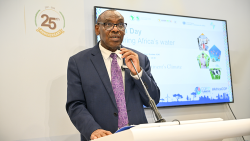
Collaborative UN System Side Event
Making Climate Finance Work Where Vulnerability Is Greatest: Country-led Solutions for Action
Opening Remarks
By
Claver Gatete
United Nations Under-Secretary-General and
Executive Secretary of ECA
COP31, Antalya, Türkiye
13 November 2026
Excellencies,
Fellow Executive Secretaries,
Distinguished Colleagues,
Ladies and Gentlemen.
I am pleased to welcome you to today's discussion on making climate finance more accessible and effective for the most vulnerable countries.
I would also like to thank our colleagues from the United Nations Convention to Combat Desertification, UN Trade and Development (UNCTAD), the International Organization for Migration and our fellow United Nations regional commissions for working with ECA to organize this event.
We are here to examine a fundamental imbalance in access to climate finance.
This imbalance is particularly evident in countries most exposed to climate change, which are often those with the fewest resources to respond.
For many, increasingly severe climate impacts are adding to existing pressures from debt, poverty, conflict and displacement.
Yet the financing available to help them adapt remains insufficient, costly and difficult to access.
The challenge is therefore not simply how much financing is available, but also its cost, the conditions attached to it and whether countries can access it in time to protect their people and economies.
Excellencies,
This financing gap is especially pronounced across Africa.
The continent requires an estimated US$277 billion annually to implement its nationally determined contributions through 2030. Yet current climate finance flows meet only about 11 per cent of that requirement.
According to UNDP, between 2014 and 2021, the most fragile countries received just over US$2 per person in international climate finance, compared with US$161 in non-fragile countries.
Addressing this disparity calls for changes in how climate finance is provided, accessed and governed.
And how do we achieve that?
First, we must protect the fiscal space of vulnerable countries.
Climate finance should not force countries to choose between responding to climate risks and financing essential public services. Adaptation, land restoration and other investments that provide broad public benefits require greater access to grants and highly concessional finance.
Second, we need to reduce the cost and complexity of accessing climate finance.
International financial institutions and climate funds should simplify procedures, strengthen project preparation support and make greater use of instruments that reduce financing risks and costs, including guarantees and appropriately designed local-currency financing.
Countries should not be denied access to climate finance simply because they lack the institutional capacity to navigate complex application processes.
Finally, we must strengthen country ownership and ensure that vulnerable countries have a greater say in how climate finance is designed and delivered.
Countries must be able to determine their own climate investment priorities, rather than having those priorities dictated by the requirements of financing institutions.
Funding should support nationally determined contributions and adaptation plans, while remaining consistent with national development strategies and public budgets.
Country ownership must also extend to the international level. Developing countries need a stronger voice in shaping financing arrangements that determine how much they can borrow, at what cost and under what conditions.
The Borrowers' Platform, launched in April this year with UNCTAD serving as its secretariat, provides an opportunity for developing countries to share experiences, identify common challenges and strengthen their collective voice on international financing issues.
Distinguished ladies and gentlemen,
At the Fourteenth Conference on Climate Change and Development in Africa, held in Addis Ababa in September this year, ECA and its partners emphasized the need for climate finance that is predictable, adequate, accessible and non-debt-creating.
As we look towards COP32 in Ethiopia, these priorities must guide our efforts to improve how climate finance is mobilized and delivered.
ECA will continue working with member States, the African Union, our fellow regional commissions and development partners to strengthen national capacities and support reforms that improve access to climate and development finance.
Ultimately, our goal is to ensure that vulnerable countries can access the financing they need, on affordable terms, to protect their people, strengthen resilience and pursue their development priorities.
Thank you.