
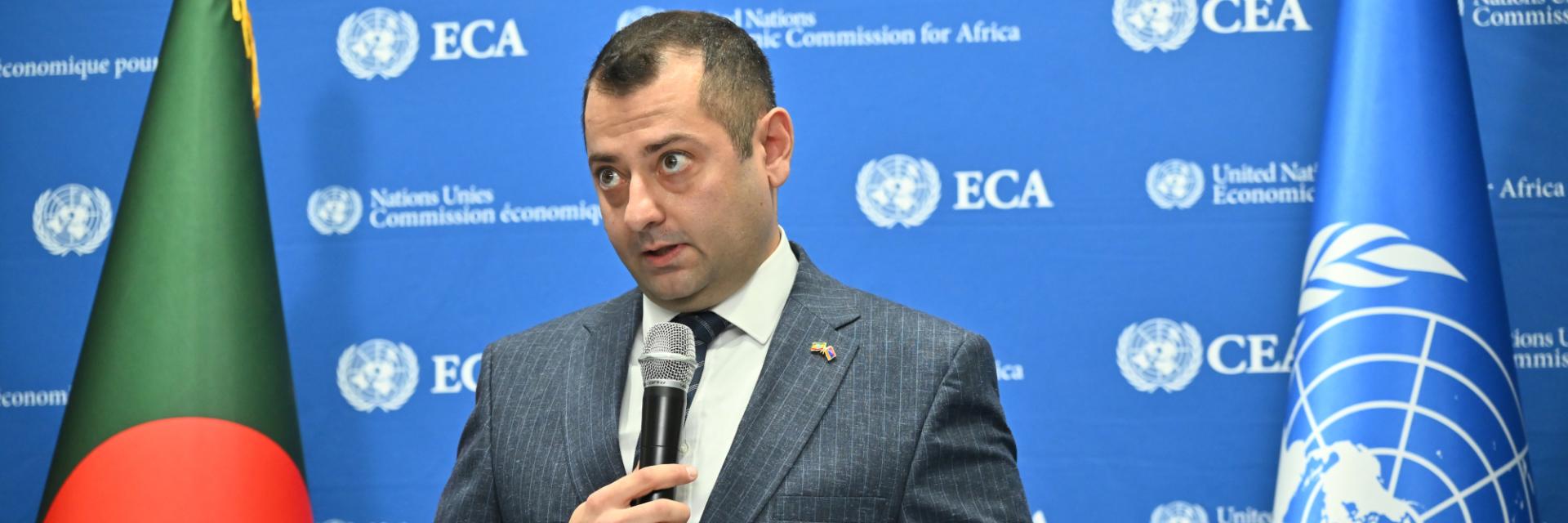
Remarks by Antony Bardakjian, Deputy Head of Mission
International Mother Language Day event – ECA, February, 2026
Excellences,
Ladies and Gentlemen,
Dear participants,
All protocols observed.
At the beginning, I would like to express our sincere gratitude to the ECA, as a traditional host and organizer of this important celebration, as well as the Embassy of People’s Republic of Bangladesh and UNESCO for their leadership and commitment to continuously commemorate the International Mother Language Day in Addis Ababa, a vibrant city of diverse culture.
Armenia, as a traditional co-sponsor of the UN General Assembly resolution on “Multilingualism” stands ready to contribute to the promotion of this important issue within the United Nations, but well beyond of existing multilateral frameworks.
It is the mother language that shapes the person and a nation, preserves the history, traditions and forms the future. With all the emerging technologies and rapid phase of globalization which was unseen before in human history, it is of utmost importance to take care of the one thing – our mother language - that defines our identity most and exposes the cultural diversity of many nations and people who ever walked on Earth.
But there are some lucky people, like me, who have multiple mother languages. Being born in Syria but growing up in an Armenian family I carry the wisdom and richness of both Armenian and Arabic cultures.
We share with our Arab neighbors ancient civilizational ties with our cultures place strong emphasis on mother language, education, storytelling, poetry, music, and the preservation of collective memory. We understand the importance of language as a guardian of identity - whether Armenian or Arabic - and the responsibility to pass it on to future generations.
نتشارك مع جيراننا العرب روابط حضارية عريقة، إذ تولي ثقافاتنا أهمية كبيرة للغة الأم، والتعليم، والسرد القصصي، والشعر، والموسيقى، وصون الذاكرة الجماعية. ونحن ندرك أهمية اللغة بوصفها حارسًا للهوية — سواء كانت أرمنية أم عربية — والمسؤولية الملقاة على عاتقنا في نقلها إلى الأجيال القادمة.
As a nation we are very proud to have one of the oldest living alphabets crafted by saint Mesrop Mashtots over 1600 years ago in 405 BC, which since then became the backbone of our identity. As the tradition goes on the first sentence that was written down in new letters was an exempt from Book of Proverbs, 1:2;
b“Ճանաչել զիմաստութիւն եւ զխրատ, իմանալ զբանս հանճարոյ:
For gaining wisdom and instruction; to perceive the words of understanding.”
It well captures Armenians’ attitude towards the value and importance of the preservation of knowledge and wisdom of the past. For centuries Armenian monasteries were famous educational and scientific hubs welcoming not only Armenian scholars but also foreigners. The Armenian translations made in the Middle Ages are particularly significant because they have helped preserve many original works that were not saved in their native languages and are now only known through Armenian translations.
For centuries the Armenian Catholicosate was hosting and preserving thousands of manuscripts in Armenian and foreign languages passing it from generation to generation, until in 1959 this vast heritage was institutionalized and converted into the Research Institute of Ancient Manuscripts named after Mesrop Mashtots. Today it is a unique scientific research institute and crown jewel of Armenian academic field. Matenadaran houses approximately 20,000 manuscripts in Armenian and other languages such as Greek, Arabic, Persian, Ottoman, Assyrian, Latin, Geʿez/Ethiopian, Georgian, Hebrew, and others. Matenadaran was registered in UNESCO’s “World Memory” list in 1997. Later in 2019 Armenian letter art and its cultural expressions were inscribed on the UNESCO’s representative List of the Intangible Cultural Heritage of Humanity. The Institute has developed a vibrant cooperation with institutions abroad in partnership with international organizations such as UNESCO including through sharing expertise based on joint projects like “Revive the Spirit of Mosul” initiative.
As we would say in Armenian «ավելի լավ է մի անգամ տեսնել քան հազար անգամ լսել» meaning "A picture is worth a thousand words" we would like to share with you a short video to get a glimpse of what Armenian letters are look like and what Matenadaran possess.
Enjoy the video and thank you for your attention!