
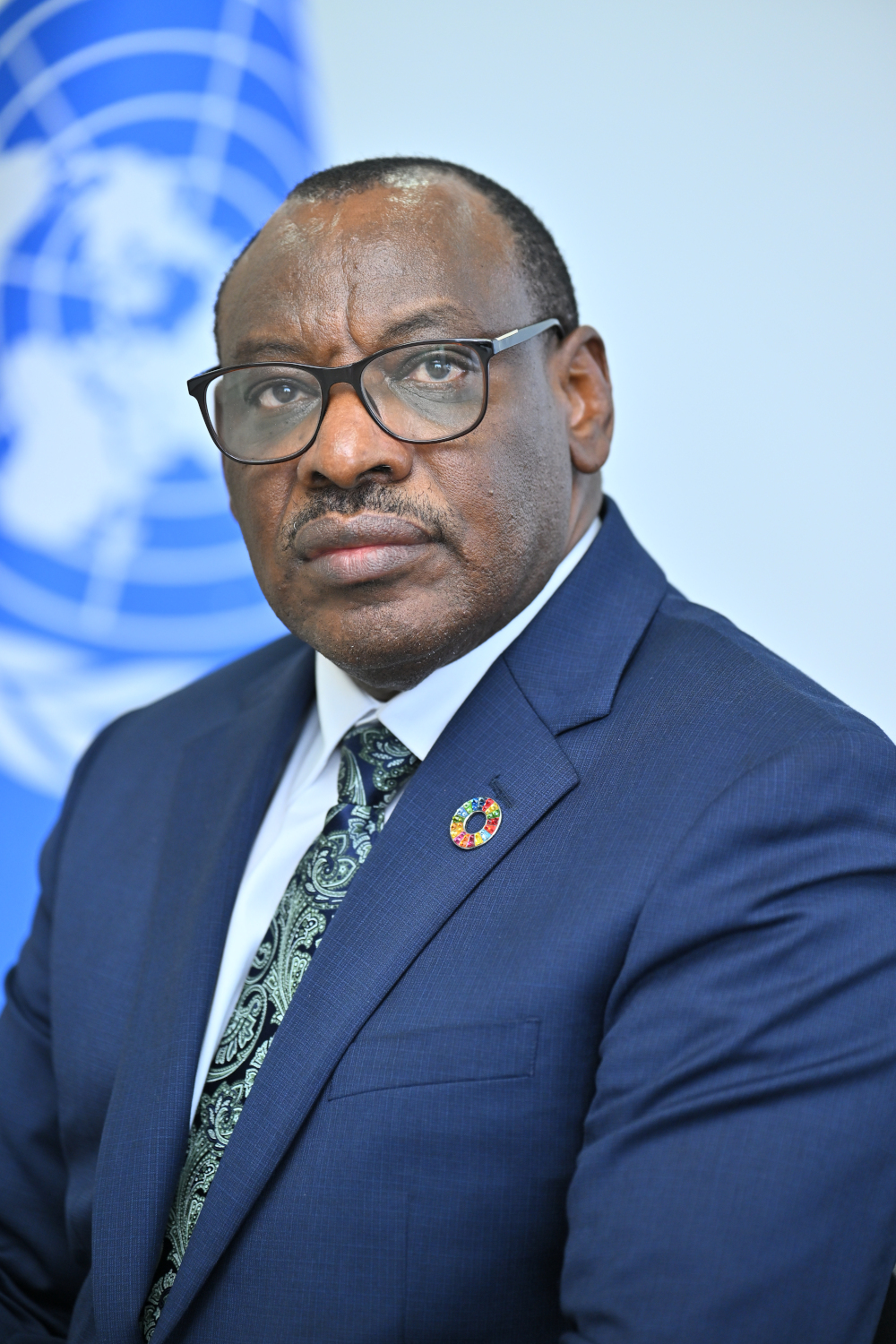
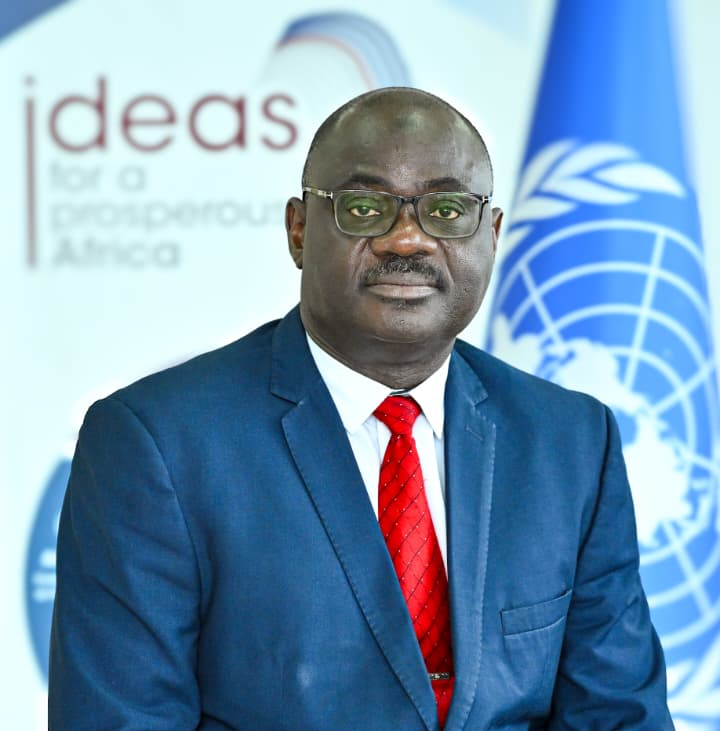
Prior to his appointment as Under-Secretary-General and Executive Secretary of the ECA, Mr. Gatete was the Ambassador and Permanent Representative of the Republic of Rwanda to the United Nations in New York. A seasoned economist, he brings to the position extensive strategic leadership expertise, coupled with international experience in the political and financial landscape of the African continent. Mr. Gatete has served in senior government positions, notably as Minister of Infrastructure (2018-2022) and Minister of Finance and Economic Planning (2013-2018).
He has also served as Governor (2011-2013) and Deputy Governor (2009-2011) of the National Bank of Rwanda, Rwanda’s Central Bank, and Secretary General and Secretary to the Treasury at the Ministry of Finance and Economic Planning in Rwanda (2003-2005). He was Director General for Economic and Social Affairs in the Office of the President of Rwanda (2000-2003), during which time, he served as the President’s Representative to the New Partnership for Africa’s Development and Coordinator of the National African Peer Review Mechanism.
Mr. Gatete began his diplomatic career in 2005 and was based in London until 2009 as Rwanda’s Ambassador to the United Kingdom, Ireland and Iceland. Prior to this, he served as National Economist of the United Nations Development Programme in Kigali (1998-2000) and Economist of Agriculture and Agri-Food and of Statistics Canada, in Ottawa, Canada (1993-1997).
Mr. Gatete holds a Bachelor’s and a Master’s degree in agricultural economics from the University of British Columbia in Canada. He is fluent in English with working knowledge of French.
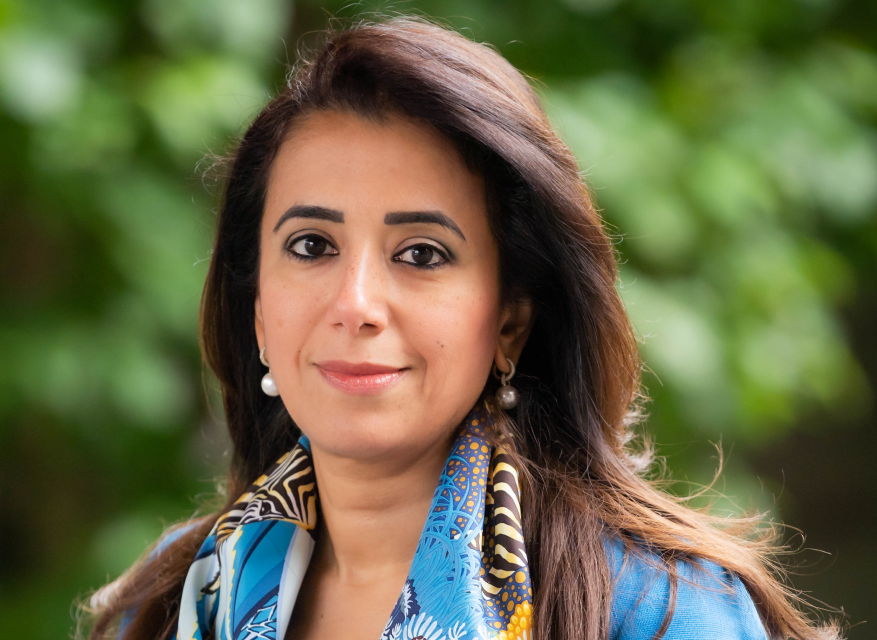
Ms. Hanan Morsy is the Deputy Executive Secretary (Programme) and Chief Economist at the United Nations Economic Commission for Africa.
Ms. Morsy has a wealth of cross-country experience and vast expertise in leading top-quality policy and development work and building strong partnerships, working in international organizations and the private sector. She has published on a wide range of economic and development issues and led a number of major flagship publications.
Prior to joining ECA, Ms. Morsy was the Director of Macroeconomic Policy and Research at the African Development Bank between 2018 and 2021, where she provided thought leadership on economic issues and oversaw the production of rigorous analytical work that strengthened the Bank’s policy dialogue and operations across its member countries.
Ms. Morsy worked previously as Associate Director and Lead Economist for the Southern and Eastern Mediterranean Region at the European Bank for Reconstruction and Development in London between 2012 and 2018. In that role, she established and headed the economic analysis and policy advisory services for the new region of operation, led country missions, and developed country strategies.
Prior to that, she worked at the International Monetary Fund between 2003 and 2012 in various capacities across different departments, including, Fiscal Affairs, Middle East and Central Asia, European, and Monetary and Capital Markets. She led and contributed to work on exchange rate assessments, fiscal vulnerability, financial and macroprudential policies. She has extensive experience in both IMF program and surveillance work across a wide range of countries from developing, to emerging, and advanced economies.
Ms. Morsy holds a Ph.D. in Economics from the George Washington University, USA, and a Master’s degree in Economics from the University of California, Davis, USA. She is from Egypt.
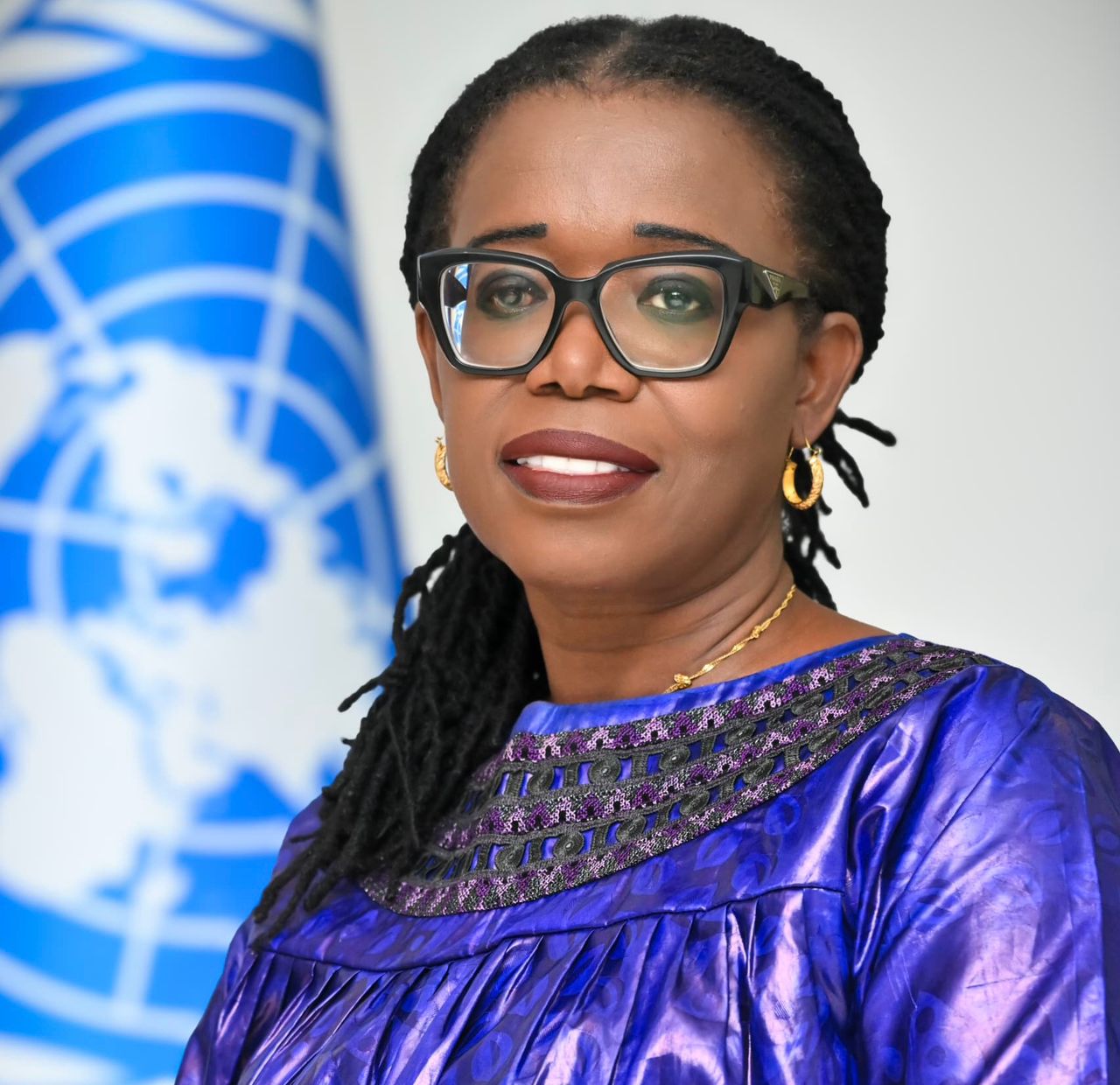
Ms. Mama Keita of Guinea assumed the role of Deputy Executive Secretary for Programme Support at the Economic Commission for Africa (ECA) on 1 March 2026, bringing more than 25 years of experience in economic policy, research, and international development. She holds a master’s degree in Statistics and Applied Economics and a Ph.D. in Economics from the University of Montreal, Canada.
Over the course of her career, she has held senior advisory roles, including serving as Economic Policy Advisor to the Prime Minister of Guinea and as a Poverty Economist at the World Bank, alongside academic appointments at the University of Montreal, the University of Ottawa, and McGill University. Initially joining ECA in 2011, she took on increasing responsibilities across the organization, including serving as Director of the Sub-Regional Office for East Africa in Kigali.
Most recently, she served as the United Nations Resident Coordinator in Niger, where she also served as Humanitarian Coordinator.
Her return to ECA brings a wealth of regional leadership and expertise, as well as a strong and continued commitment to advancing Africa’s development agenda.
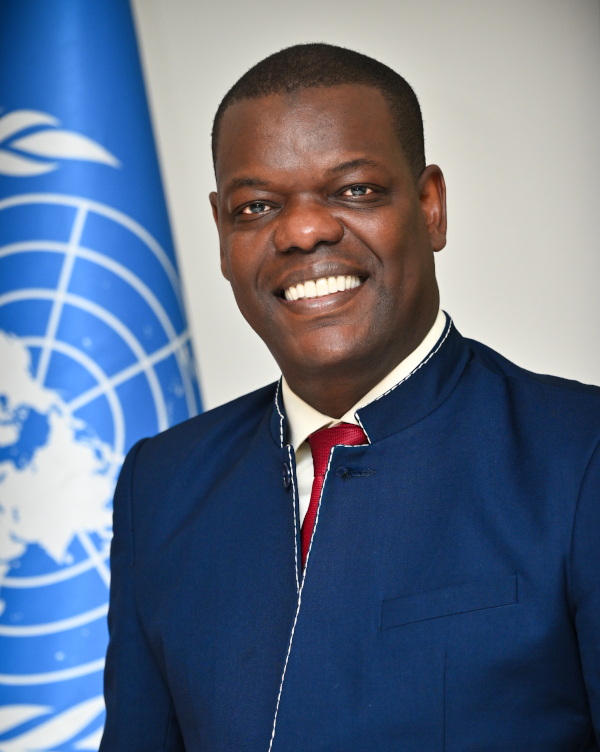
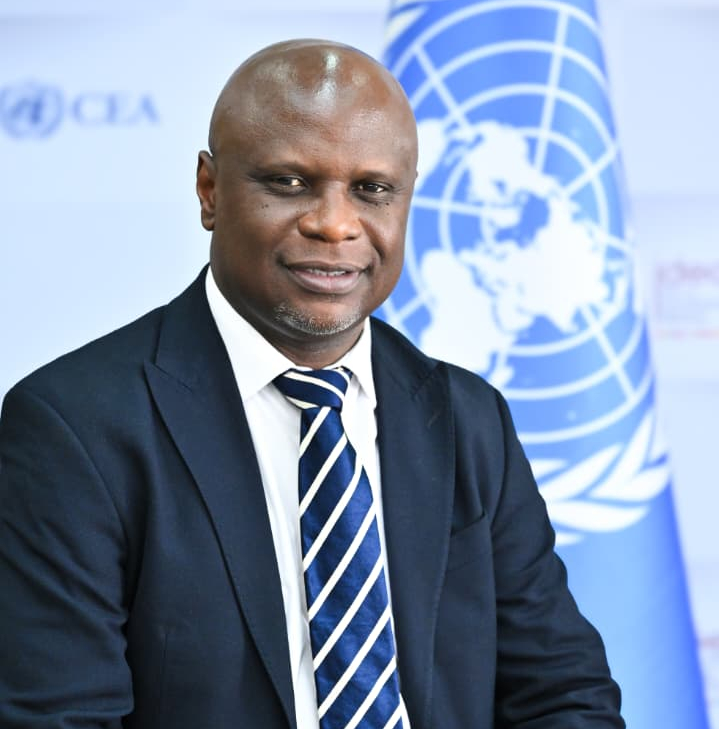
Said Adejumobi oversees strategic planning, results-based management, accountability mechanism, oversight activities, and institutional coherence to further ECA's sustainable development initiatives across the continent.
With over thirty years working experience, he possesses high level expertise in the areas of governance, democracy, public sector issues, development policy, theory and practice and had served in different capacities including as Regional Director, ECA Sub-Regional Office for Southern Africa, Director of the Governance and Public Administration Division (GPAD) of ECA, and Governance Adviser to the ECOWAS Commission, Abuja, Nigeria.
He holds a PhD in Political Science and spent nearly two decades in academia prior to his tenure with the United Nations. He has published extensively on African development issues and continues to enhance ECA’s reputation as a leading think tank and policy forum advancing Africa’s transformation. His publications include twelve (12) edited/authored books and over seventy (70) articles in learned journals and chapters in books. His recent edited books include: Developmental Regionalism and Economic Transformation in Southern Africa (New York: Routledge, 2020); Voice and Power in Africa's Democracy: Institutions, Participation and Accountability (New York: Routledge, 2018). Democratic Renewal in Africa: Trends and Discourses (New York: Palgrave Macmillan, 2015) and National Democratic Reforms in Africa: Changes and Challenges.(New York: Palgrave Macmillan, 2015).
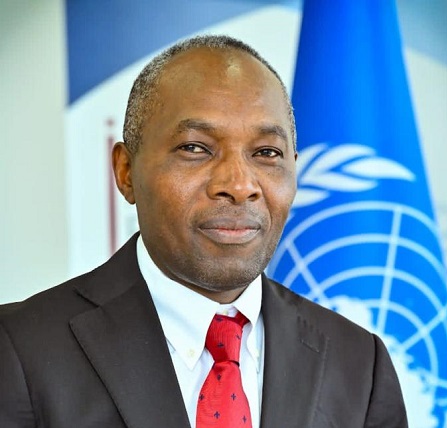
Robert Tama Lisinge is an Engineer and a regional infrastructure development strategist. He is also a trade and transport facilitation specialist and a leading road safety expert in Africa. With over 20 years of experience in undertaking research, providing technical assistance and advising African countries and organisations in these areas, Mr. Lisinge’s Division is responsible for the ECA’s work on energy, transport and digital transformation. The Division’s work is situated at the intersection of frontier technology and economic transformation. It also deals with issues related to science and innovation.
Prior to his current position, he was the Chief of the Energy, Infrastructure and Services Section of ECA. He has also been the Chief of the Operational Quality Section of the Strategic Planning and Operational Quality Division of ECA.
Since 2000, Mr Lisinge has been actively involved in major infrastructure development initiatives in Africa, including the Programme for Infrastructure Development in Africa (PIDA), NEPAD Presidential Infrastructure Champion Initiative, and infrastructure and services flagship projects of African Union’s Agenda 2063, including the Single African Air Transport Market (SAATM). He played a leading role in articulating the African Road Safety Action Plan (20211-2020) and the continent’s post-2020 Road Safety Strategy. He has represented the Economic Commission for Africa (ECA) in the Steering Committee of PIDA and Executive Board of the African Transport Policy Programme (SSATP); and is the Commission’s Focal Point for the United Nations Road Safety Trust Fund (UNRSTF). He also represents ECA in the Task Force created to develop a global Action Plan for the Second UN Decade of Action for Road Safety (2021-2030) and is a member of the FIA High-Level Panel Experts Group.
Mr. Lisinge has made inputs to ECA’s flagship publications, published in peer-reviewed journals and delivered courses on transport infrastructure development at the African Institute for Economic Development and Planning in Dakar, Senegal.
He holds a BSc in Civil Engineering and an MSc in Transportation Engineering. He also holds an MPhil and a Doctor of Business Administration Degree from the Maastricht School of Management in the Netherlands.
Before joining the United Nations, Karingi was a Senior Analyst and the Head of Macroeconomics Division in the Kenya Institute for Public Policy Research and Analysis (KIPPRA). He also served as a Lecturer of Economics at Egerton University prior to his work at KIPPRA.
He was a recipient of the then Zolt-Gilburne Visiting Fellowship of the International Tax Programme of the Harvard Law School in 2001 and the winner of the 2013 Alan A. Powell Award in recognition of his contributions to Global Economic Analysis issues from an African perspective. He has published widely, including in peer-reviewed journals.
Mr. Karingi has served as a member of the High-Level Board of Experts on the Future of Global Trade Governance and is presently serving in the African Continental Free Trade Area (AfCFTA) Trade and Industrial Development Advisory Council. He is also a member of the High-Level Group on Trade in the context of EU-Africa relations and is on the Editorial Board of the Journal of African Trade.
He holds a PhD and a Masters Degree from the University of New England, Australia.
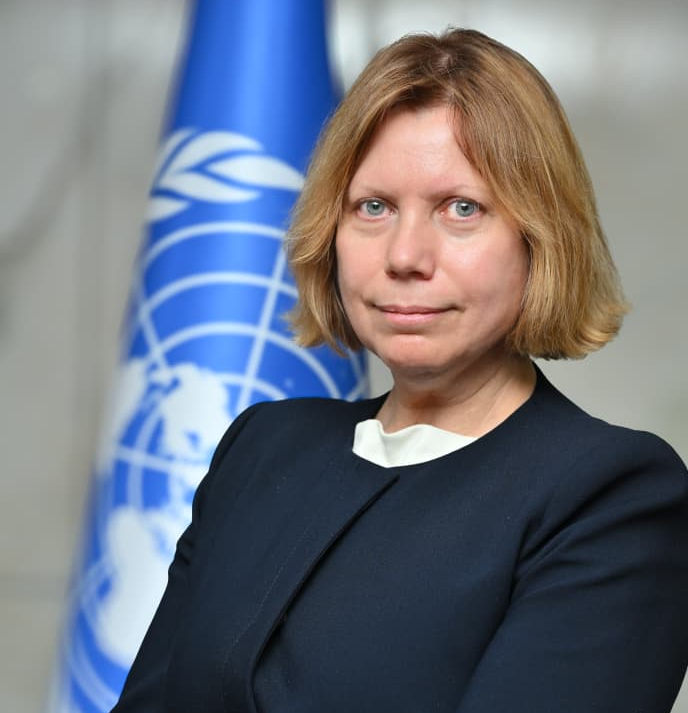
Zuzana Brixiovia Schwidrowski previously served as Director of the Macroeconomics, Finance & Governance Division and before that, as Director for the Sub-Regional Office for North Africa. Before joining the ECA, Ms. Schwidrowski was the Vice President and Senior Analyst covering Southern Africa sovereigns and several African MDBs at Moody’s Investors Service. She also served as Lead Advisor to the Chief Economist and Vice President at the AfDB and as the IMF Resident Representative in Belarus and Lithuania.
Ms. Schwidrowski's experience in academia includes being an Adjunct Professor at the University of Cape Town, a Fulbright Scholar at Addis Ababa University, and a Research Fellow at IZA.
She holds a PhD in Economics from the University of Minnesota.
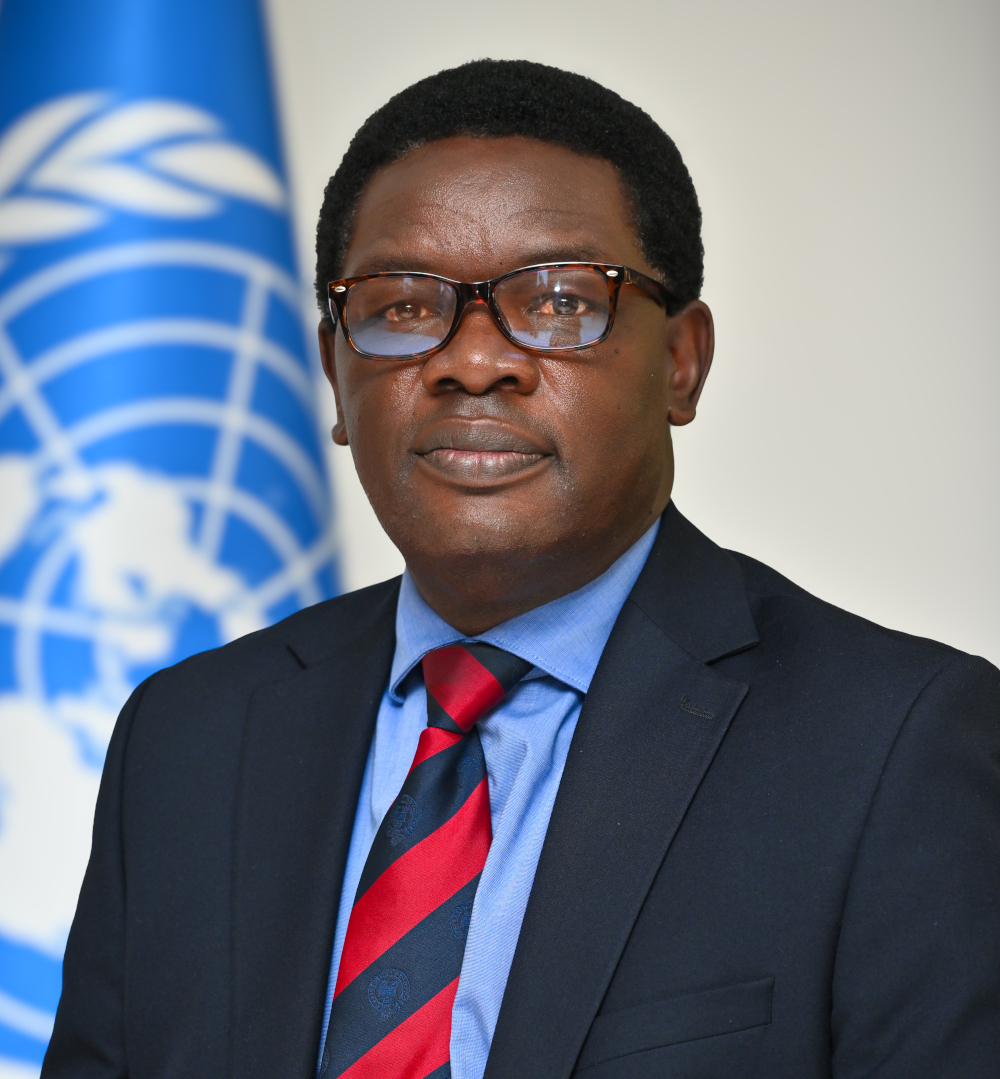
Before joining the UN Economic Commission for Africa, Ochieng served as the Global Director for the Center for Equitable Development at the World Resources Institute (WRI). Prior to that he served as Director of the African Natural Resources Centre at the African Development Bank (AfDB) in Abidjan.
A development and environment expert, Mr. Ochieng, has also held appointments with various universities, policy thinktanks and development institutions. These include as Associate Professor of the Practice of Global Development Policy at the Pardee School of Global Studies at Boston University (US); Lecturer in Sustainable Agriculture, Land and Water at Lancaster University (UK) and Executive Director of the African Centre for Technology Studies (ACTS) in Nairobi Kenya.
He is also a former Technical Coordinator of the Business, Economics and Biodiversity program of IUCN’s Eastern and Southern regional office in Pretoria, South Africa and a Research Fellow with the International Food Policy Research Institute (IFPRI) in Addis Ababa, Ethiopia.
Mr. Ochieng's works have been published in peer-reviewed journals, including World Development, Journal of International Economic Law, Journal of Modern African Studies and Natural Resources Forum. He holds a Doctor of Philosophy in Development Studies from Oxford University and a Masters in Development Studies from Cambridge University.
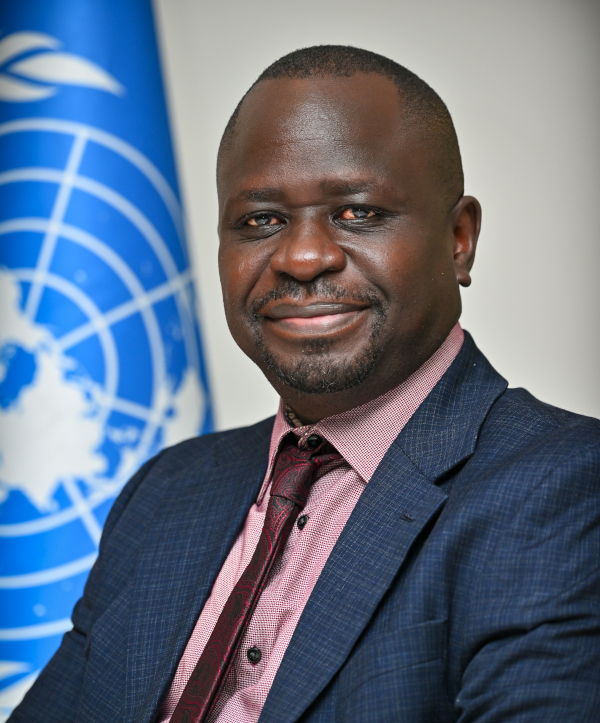
Mr. Samuel Kobina Annimhas been the Director of the African Centre for Statistics (ACS) within the UN Economic Commission for Africa (ECA) since September 2025.
Before joining ECA, Mr. Annim served as the Head (Government Statistician) of the Ghana Statistical Service from 2019 to 2025. Prior to that, he spent 17 years at the University of Cape Coast in Ghana as an academic, where he was appointed Professor of Economics in 2018. During this period, he served as the Director of the University's Research, Innovation and Consultancy Directorate and Head of the Department of Economics.
At the international level, Samuel has served as Co-Chair of the United Nations High-Level Group on Partnership, Coordination and Capacity Building (UN-HLG PCCB) and as Chair of the Executive Board and the Board of the Partnership in Statistics for Development in the 21st Century (PARIS21).
Samuel received a Doctor of Philosophy in Economics from the University of Manchester, United Kingdom. He also holds a Master of Philosophy in Economics from the University of Ghana and a Bachelor of Arts Degree in Economics from the University of Cape Coast, Ghana.
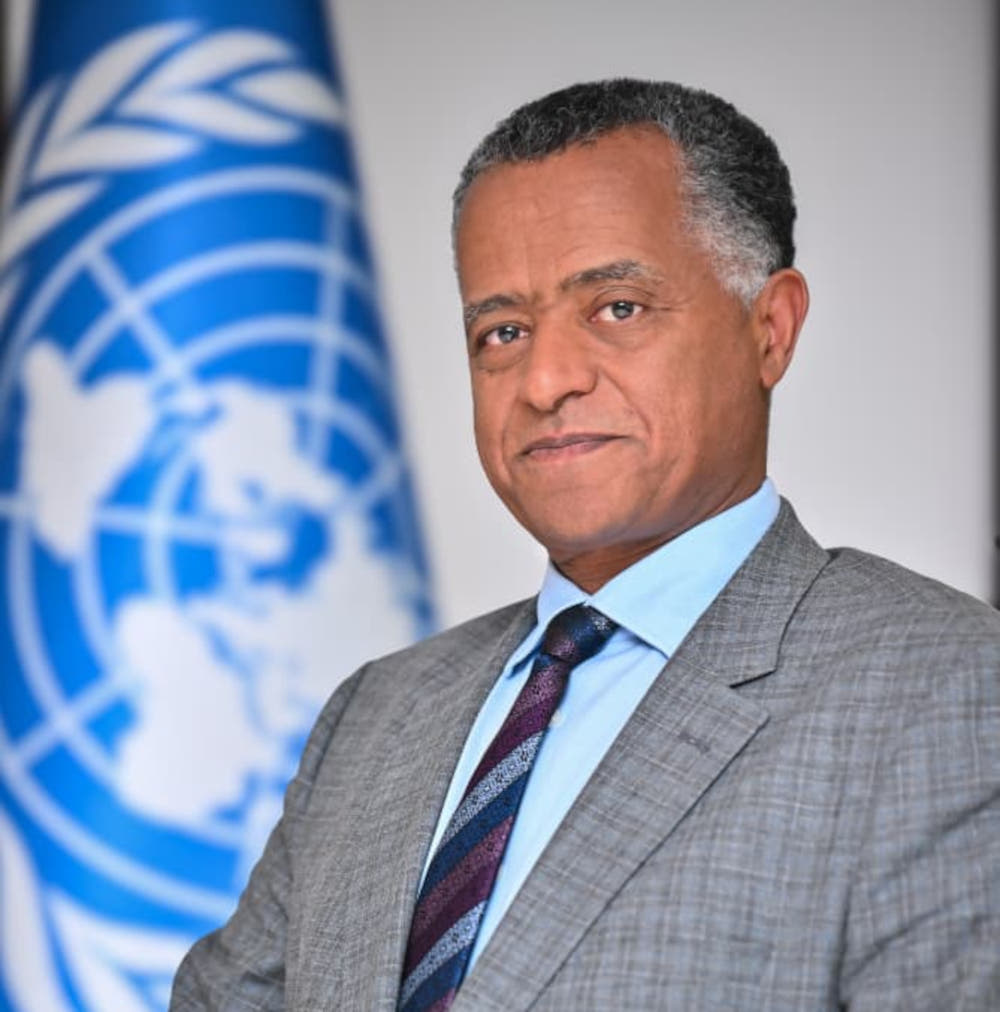
Melaku Geboye Desta is a lawyer by background and, until he joined the ECA, a university professor of law with over 30 years of expertise in international trade law, African regional integration, and natural resources governance. His career blends high-level academia—having attained the rank of full Professor of International Economic Law in the UK—with over nine years of practical experience at the United Nations Economic Commission for Africa (ECA).
His extensive background includes advising on international agreements, serving as an arbitrator in major state-corporate disputes, leading African governance review processes, and designing and delivering capacity-building programs.
He holds a PhD in International Economic Law and has published widely on international and African economic law, with a particular focus on agriculture and natural resources.
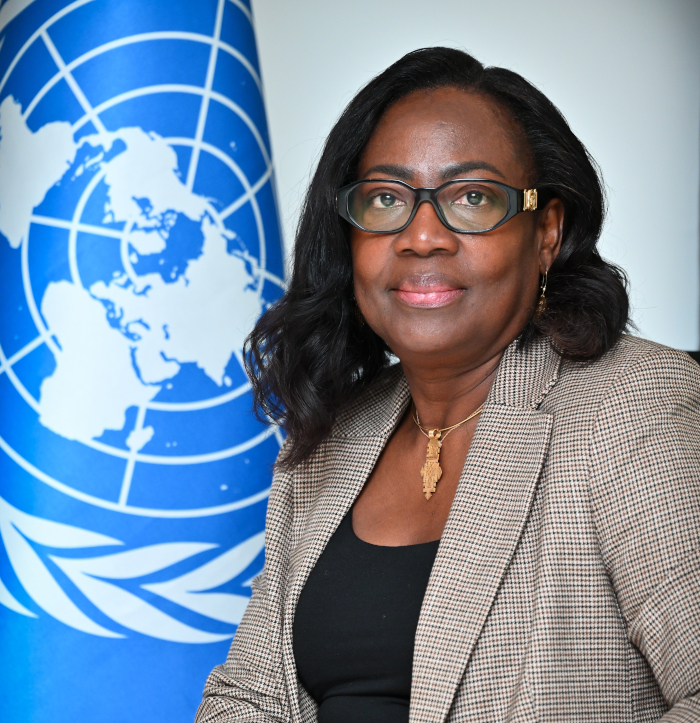
Mai-Ellen T. Russ is the Officer-in-Charge at the Division of Administration at the UN Economic Commission for Africa (ECA). She brings extensive expertise in financial management, accounting, and business administration. At ECA, she has served in multiple leadership roles, including Chief of Finance and Budget, Chief of Accounts, Chief of Budget, Chief of Payroll, and as Programme Management Officer.
Before joining the UN, she held senior financial roles in the United Kingdom at Probus Estates Plc., Hammersons Plc., the Royal Palaces Agency, and the BBC Television. She began her career as an auditor with Coopers & Lybrand in Liberia. Ms. Russ is a Fellow of the Association of Chartered Certified Accountants (FCCA) and holds an M.A. in Business Administration from Oxford Brookes University, United Kingdom.
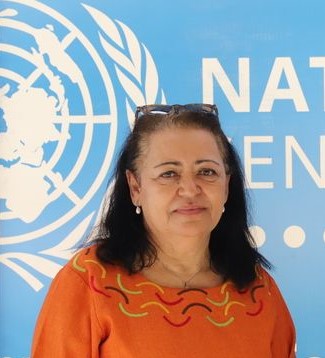
Karima Bounemra Ben Soltane has extensive experience in ICT development and policy planning across Africa, with career highlights that include serving as the Director of the ECA’s African Institute for Economic Development and Planning (IDEP) since August 2015, where she oversees advanced capacity building programs for African member states’ leaders and development stakeholders.is the Director of the African Institute for Economic Development and Planning (IDEP).
Prior to IDEP, she held two leadership positions, serving as the Subregional Office for North Africa Director, where she promoted policy harmonization and regional integration across the subregion. She started her leadership roles at the ECA as the Director of the Information for Development Division, where she promoted pioneering work in ICT for socioeconomic development and the coordination of the African Information Society Initiative.
Before joining the ECA, she served as President and Director of the Institut régional des sciences informatiques et des télécommunications (IRSIT) in Tunisia, leading R&D and managing ICT policy and planning. In this role, she directed the Telecommunications and Networks department at IRSIT and contributed to the foundational blueprint for Africa's entry into the information age, the AISI.
Her early career began as an expert in ICT standardization. She chaired a group of experts at the French standards body AFNOR and played a significant role in developing national and regional ICT policies.
Ms. Bounemra Ben Soltane holds a PhD in information systems.
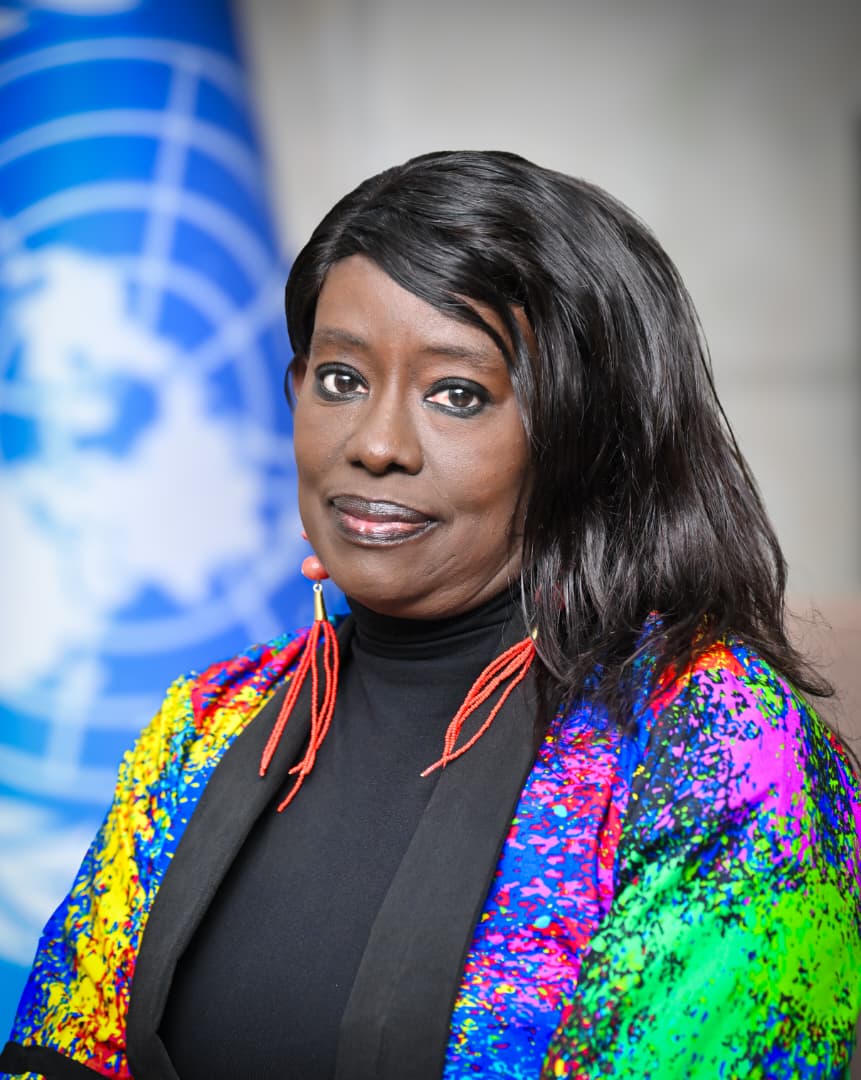
Ngone Diop is a seasoned economist and development expert with over 20 years of experience in strategic leadership, macroeconomic policy, poverty reduction, gender equality, and transformative development.
Since her appointment in 2020, Ms. Diop’s portfolio has spanned 15 countries, including the Sahel, and 15 Intergovernmental Organizations, making it ECA’s largest and most complex subregion. She has spearheaded flagship initiatives to accelerate implementation of the African Continental Free Trade Area (AfCFTA), including support to national AfCFTA strategies in 14 West African countries.
Under her leadership, the office received an award from the Africa Economic Zones Organization in 2022 recognizing its contribution to regional economic integration. She has also championed a regional programme on demographic dividend–sensitive budgeting, helping countries design policies and investments that harness the potential of Africa’s youth.
To leverage digitalization and the private sector, Ms. Diop launched the West African Business Linkages Platform (WABLP), a digital B2B tool that connects and empowers more than 500 young and women entrepreneurs across multiple sectors.
In response to mounting debt vulnerabilities in the subregion, she led a domestic resource mobilization and debt-swap initiative and provided tailored support to national investment plans, investment conferences and donor roundtables, contributing to significant increases in resource mobilization for member States.
Previously, Ms. Diop served as Chief of Gender Equality and Women’s Empowerment at ECA, where she led the African Gender and Development Index, the African Union Gender Scorecard and economics-of-gender programmes, supporting evidence-based policymaking on women’s empowerment. Earlier, she worked as an adviser to the Government of Rwanda with the UK Department for International Development (DFID), contributing to the formulation of Vision 2020, post‑genocide recovery programmes and pioneering gender‑equality policies, including the country’s first gender‑budgeting initiative, which helped underpin Rwanda’s globally recognized progress on gender parity.
Her international policy experience also includes serving as a Policy Advisor at UNDP in New York, where she led Millennium Development Goals–related programmes, and as Regional Technical Advisor on gender budgeting at the World Bank. In parallel with her policy work, Ms. Diop has held academic roles, including as Course Director at ECA’s African Institute for Economic Development and Planning (IDEP) and as a lecturer at ISEG in Dakar, Senegal. She has served on the boards of Akina Mama wa Afrika, as Vice President, and the Agency for Cooperation and Research in Development (ACORD), reflecting her long-standing engagement with civil society.
Ms. Diop’s publications focus on gender budgeting, women’s rights and inclusive economic growth, with contributions to works published by the Commonwealth, Zed Books and Emory University, among others. Her leadership and influence have been recognized through honours such as the 2024 ELOY Awards, listing in the Africa Women CEOs Network “50 Power People” and inclusion in the 2025 Tropics “African Doers Powerlist.”
She holds a Masters in Economics from Aix‑Marseille III University, a Masters (DEA) in economics and management, and a BA in Economics from Aix‑Marseille II, France, complemented by various leadership and management certificates.
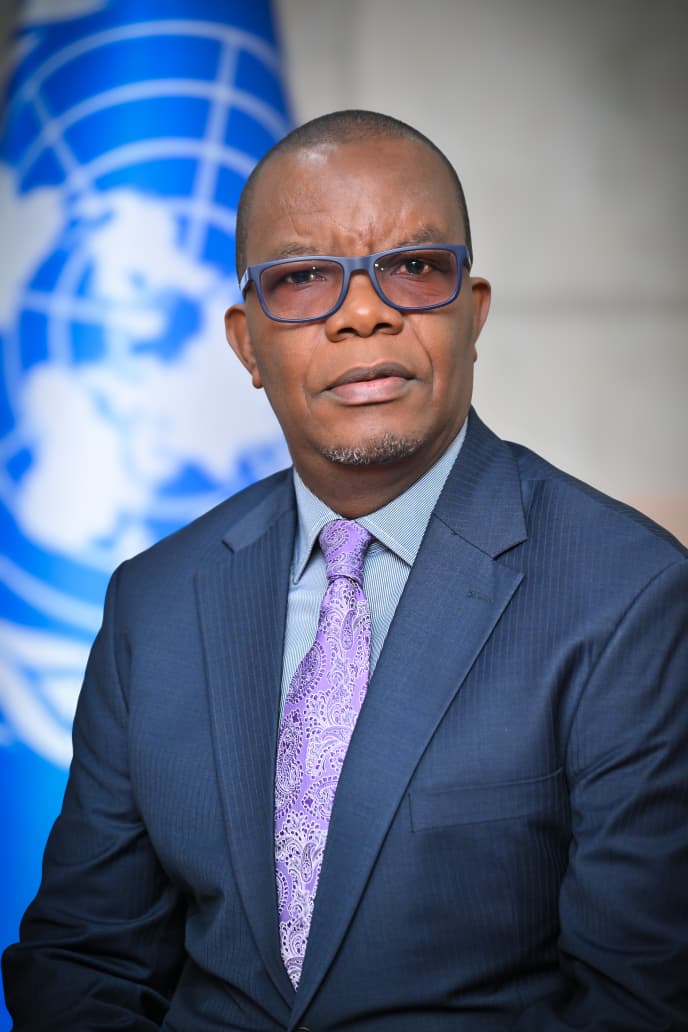
Jean Luc Mastaki Namegabe is an economist with a PhD in Rural Economics from the University of Liège, Belgium. He has over 20 years of experience in researching, formulating, and evaluating development policies in Africa, spanning sub-regional, regional, and national levels.
He began his career with the United Nations Economic Commission for Africa (ECA) in December 2004, joining through the Young Professionals Program (formerly the National Competitive Examination). Over the last fifteen years, he has held various posts, including Economic Affairs Officer in the former Sustainable Development Division at ECA headquarters in Addis Ababa, Ethiopia, and Economist at the sub-regional offices for Southern Africa in Lusaka, Zambia, and for West Africa in Niamey, Niger.
Mr. Mastaki was subsequently seconded as Senior Economist and Team Leader, responsible for trade and markets of tropical products at the FAO Trade and Markets Division (EST) in Rome, Italy. Upon his return to the ECA, he was posted to Yaoundé, serving successively as Principal Economist and Head of the Economic Diversification Policy Support Section. He served as the interim Director of the Sub-Regional Office for Central Africa between November 2021 and April 2023.
Mr. Mastaki has played a crucial role in developing structural transformation policy frameworks for the region. His notable contributions include the regional AfCFTA Strategy for Central Africa and the Industrialization and Economic Diversification Master Plan for Central Africa. At the national level, these industrialization strategies and plans are now operational in all countries. For instance, the Central African Republic, historically focused on very short-term emergency plans, has now developed and adopted its national development plan with the support of the Office.
Among Mr. Mastaki's major initiatives is the Battery and Electric Vehicle Initiative, which is currently establishing a Cross-border Special Economic Zone between the DRC and Zambia for the processing of cobalt, copper, manganese, and other critical metals.
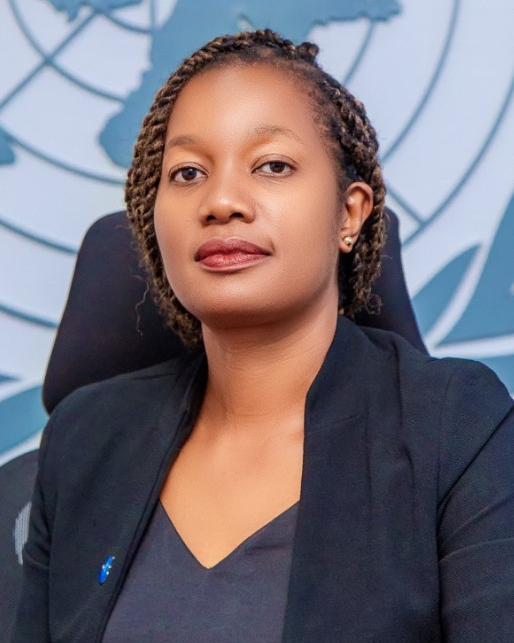
Eunice G. Kamwendo has over 20 years of experience in economic development, analysis, and policy research, with impactful contributions to inclusive growth and structural transformation across Africa.
She has served as the Director of the United Nations Economic Commission for Africa’s Southern Africa Sub-Regional Office in Lusaka, Zambia, since August 2021. The office focuses on inclusive industrialization and economic transformation.
Before joining ECA, Ms. Kamwendo spent 15 years at UNDP in various roles, including Acting Chief Economist and Senior Strategic Advisor in New York, as well as Policy Advisor at the UNDP Regional Service Centre for East and Southern Africa in South Africa.
Her earlier career includes positions as an Economic Governance Research Analyst for the African Peer Review Mechanism (APRM) Secretariat in South Africa, Senior Economist and Special Advisor to the Secretary of the Treasury in Malawi’s Ministry of Finance, and Economist in the Ministry of Economic Planning and Development, where she contributed to Malawi’s fiscal policies, Vision 2020, and growth strategies.
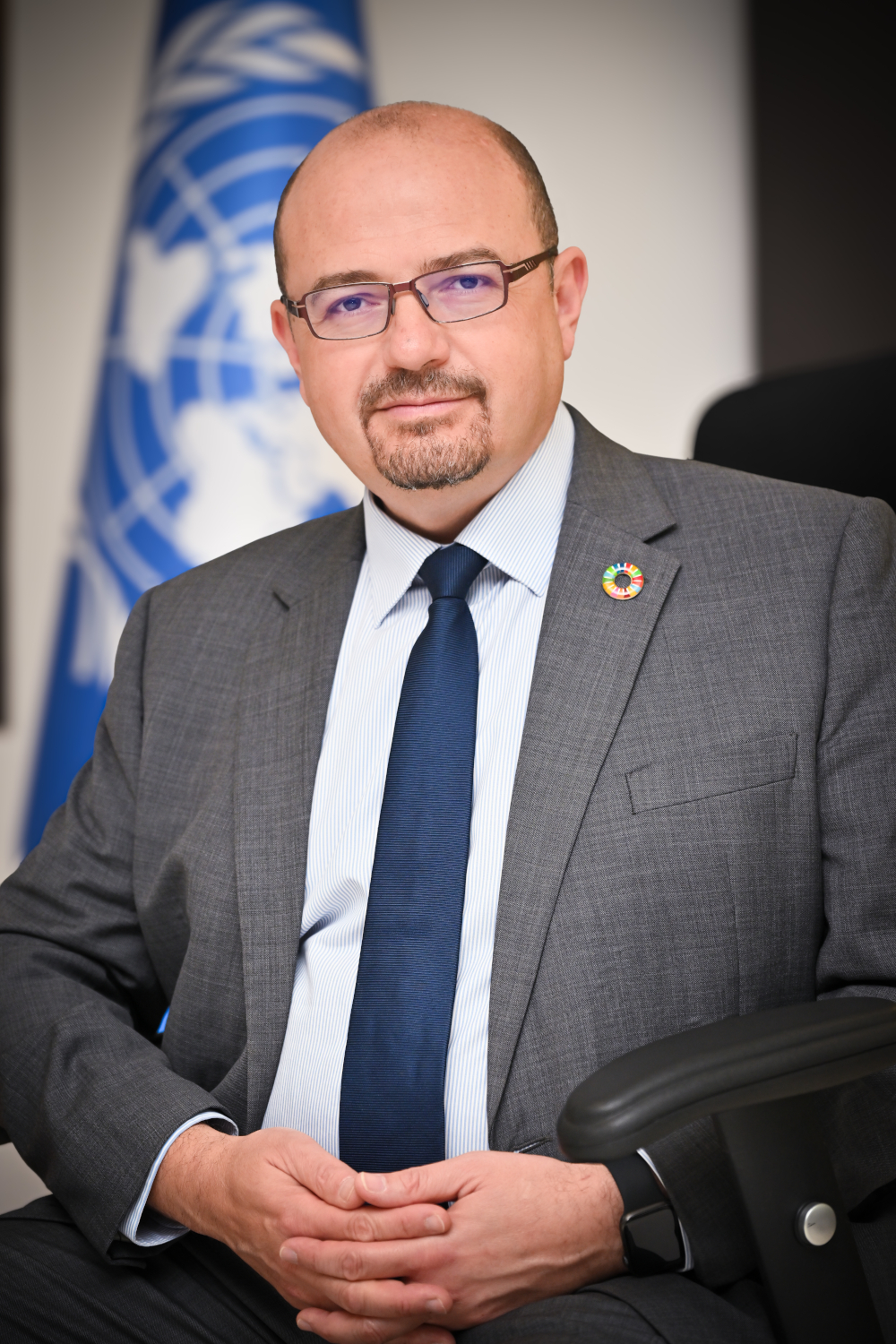
Nassim Oulmane is the Director of the United Nations Economic Commission for Africa (ECA) Subregional Office for North Africa, based in Rabat, Kingdom of Morocco. Previously, he was Chief of the Natural Resources, Green and Blue Economy, and Food Security Section in the Climate Change, Food Security and Natural Resources Division of ECA, based at its headquarters in Addis Ababa, Ethiopia. He has over 25 years of professional experience spanning academia, national government, international organizations, and the United Nations system. He has also served as Acting Director of ECA’s Technology, Climate Change and Natural Resources Division and Acting Director of the ECA Subregional Office for North Africa.
An economist by training, Oulmane specializes in sustainable development, climate change, green and blue economy, biodiversity and carbon markets, natural resource governance, international trade, economic transformation, and development policy. His recent work focuses on advancing climate-resilient and inclusive growth pathways in Africa, promoting sustainable natural resource management, strengthening blue economy governance, supporting the development of carbon and biodiversity markets, and mobilizing innovative financing for sustainable development, including climate finance, blue finance, and sustainable debt instruments.
At ECA, he has played a leading role in several continental initiatives related to climate finance, natural capital valuation, sustainable debt, critical minerals, blue economy development, and regional integration. Oulmane also coordinated the African Regional Forum on Sustainable Development, the continent’s premier platform for reviewing progress on the Sustainable Development Goals and Agenda 2063, and for preparing Africa’s collective input to the United Nations High-Level Political Forum on Sustainable Development. In this role, he contributed to strengthening regional consensus-building and accelerating sustainable development efforts across the continent.
Prior to joining ECA, Oulmane held positions in academia, government, and international institutions, including serving as Coordinator of the World Trade Organization Chairs Programme. He has taught economics, international trade, and development policy at universities in Africa, Asia, and Europe.
Oulmane is the author and co-author of numerous books and scholarly publications. He regularly advises African governments, regional organizations, and international partners on blue economy strategies, climate resilience, innovative financing, sustainable debt solutions, ocean governance, natural capital management, and sustainable development pathways for coastal and island states. His work seeks to bridge economic transformation, environmental sustainability, and social inclusion in support of Africa’s development priorities and the broader Global South agenda
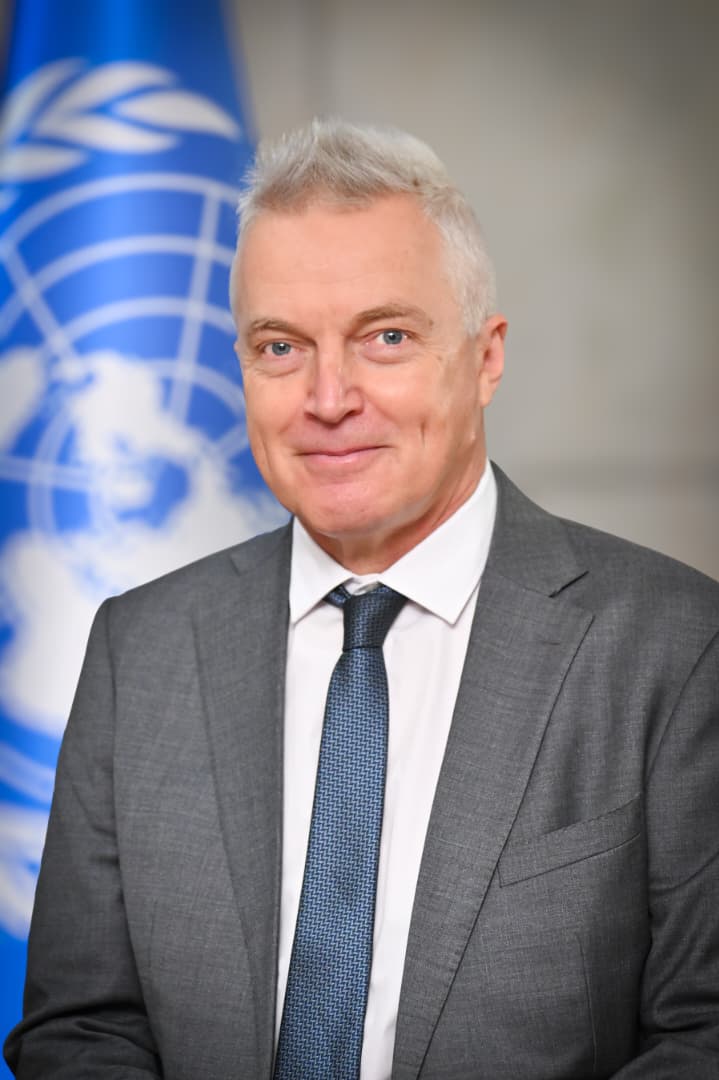
Andrew Mold has a Masters in Economics and Politics of Development from Cambridge University, and a Ph.D. in Economics from the Complutense University of Madrid. He has previously worked for the UN Secretariat in Chile and in Addis Ababa, and also for UNICEF in Costa Rica.
Mr. Mold worked from 2008-2011 at the OECD Development Centre in Paris, where he was a Senior Economist and in charge of their flagship publication ‘Perspectives on Global Development: Shifting Wealth’. From 2004-2009 he was editor of the European Journal of Development Research. Author of two books - ‘EU Development Policy in a Changing World – Challenges for the 21st Century’ (Amsterdam/Chicago University Press), and ‘Policy Ownership and Aid Conditionality in the Light of the Financial Crisis – A Critical Review’ (OECD, Paris) - Andrew has published in a wide-number of journals, including the Journal of African Trade, Journal of International Development, the CEPAL Review, the African Development Review, Development, the Journal of Common Market Studies, and the Journal of Agricultural Economics. He is also co-author (with Francis Mangeni) of the book ‘Borderless Africa - A Sceptic’s Guide to the Continental Free Trade Area’ (Hurst Publishers).