
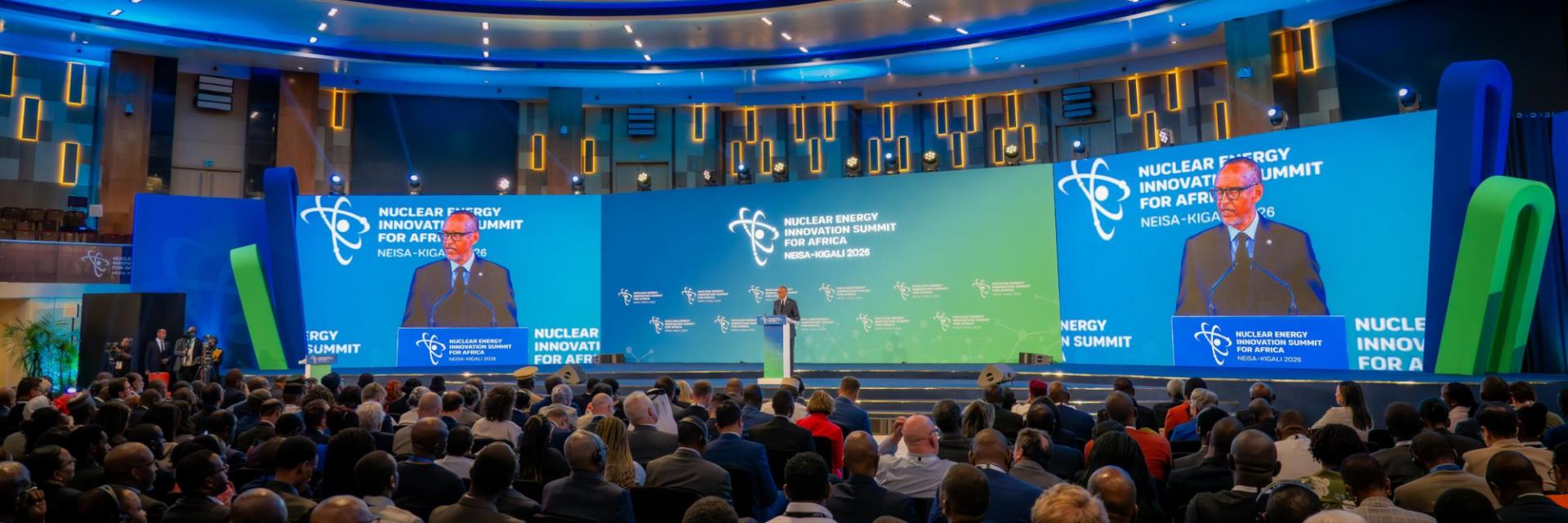
Kigali, Rwanda, 21 May 2026 - African leaders, international financial bodies, and global energy experts convened at the second edition of the Nuclear Energy Innovation Summit for Africa (NEISA 2026) to transition the continent’s nuclear energy ambitions into realities.
At the heart of the summit, the Ministerial Compact Roundtables brought together key regional and global leaders to outline concrete pathways for financing and implementing nuclear infrastructure across African newcomer countries.
Discussing regional integration as a financing catalyst, Jimmy Gasore, Rwanda’s Minister for Infrastructure, emphasized that African nations must unite to share the immense financial and regulatory burdens of nuclear programs. Leveraging the African Continental Free Trade Area (AfCFTA), Minister Gasore highlighted how a unified market of 1.4 billion people and a GDP exceeding $3 trillion USD can unlock the necessary economies of scale.
"For us in Africa, cooperation is not an option, but a necessity," Minister Gasore stressed, urging the harmonization of regulatory frameworks and coordinated investment planning to ensure an inclusive energy transition rooted in capacity building.
Reinforcing this, Robert Lisinge, Director of Technology, Innovation, Connectivity, and Infrastructure at the UN Economic Commission for Africa (ECA), stated that nuclear energy "must be formally integrated into the Programme for Infrastructure Development in Africa (PIDA) to ensure it aligns with continental growth goals."
Beyond physical infrastructure, Lisinge emphasized that building local talent is just as important as building reactors. He said that "the African Academy of Sciences should be central to upcoming discussions, ensuring robust human capacity building and local expertise are developed alongside the technology."
The Emerging African Financing Framework
Yohannes G. Hailu, Economic Affairs Officer at the UN Economic Commission for Africa (ECA), presented a comprehensive summary of the session on "Financing Africa's Nuclear Future". Hailu captured the mindset of the summit's leadership by stating that as nations evaluate the capital required for nuclear energy, they must equally weigh "the cost of inaction". He outlined a number of innovative financial mechanisms and structural mandates currently under consideration by regional stakeholders:
-
Nuclear Regionalism: Exploring joint project development through capital sharing among neighboring nations.
-
Domestic Resource Mobilization: Establishing national and regional funds to crowd in private capital while leveraging African pension funds and social securities.
-
Market and Utility Reforms: Committing to domestic tariff and utility reforms to ensure projects are strictly bankable for multilateral support.
Hailu also shared a significant step forward for global representation, thanking the World Nuclear Association for including African representation on the advisory panel for the emerging Global Guide for Nuclear Finance.
Reaffirming global support, Gashaw Gebeyehu Wolde of the International Atomic Energy Agency (IAEA) pledged the agency's continued backing through its Milestones Approach and workforce development frameworks. "Africa has an opportunity to build a cooperative and sustainable model for nuclear development," Wolde concluded.
Issued by:
Communications Section
Economic Commission for Africa
PO Box 3001
Addis Ababa
Ethiopia
Tel: +251 11 551 5826
E-mail: eca-info@un.org