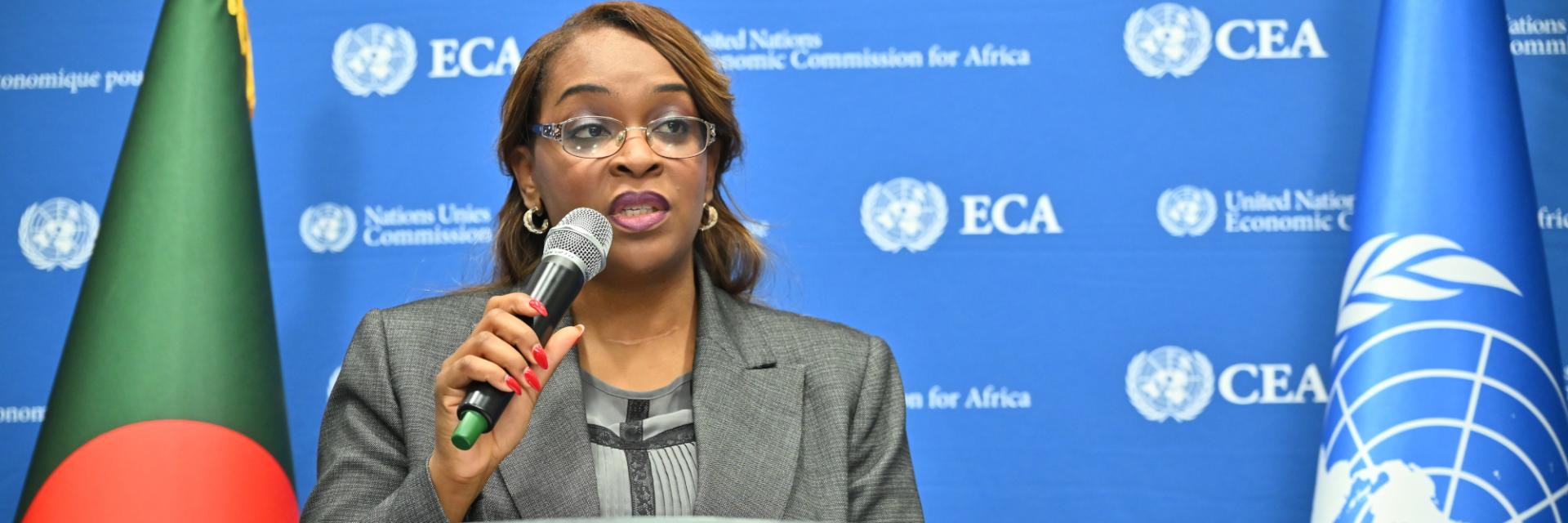
Remarks by H.E. Mrs. Néfertiti Mushiya Tshibanda,
Representative of the International Organization of La Francophonie (OIF)
to the AU and ECA
International Mother Language Day
ECA, 25 February 2026
Your Excellencies,
Ladies and Gentlemen,
Dear guests,
Each language we celebrate today carries with it a vision of the world, a collective memory, and a unique way of inhabiting the future. In Africa, a continent of youth and diversity, each language is a living heritage. The linguistic wealth is one of the richest in the world, and the defense of mother languages is a matter of dignity, equity, and cultural sovereignty. It is at the heart of inclusion, citizen participation, and the stability of societies. The promotion of cultural and linguistic diversity is the very foundation of the Francophone project. In these times of upheaval for multilateralism, it is more than ever at the center of its advocacy on the international stage. It is also the guiding principle of its action on the ground, for the benefit of populations.
The International Organization of La Francophonie (OIF) is proud to join in the celebration of International Mother Language Day each year. I would like to warmly thank the United Nations Economic Commission for Africa and the partner embassies for inviting us.
The OIF has made multilingualism one of its priorities because it firmly believes that respect for languages is inseparable from action for peace and development. And for the OIF, social cohesion and living together are built in schools, every day, in every classroom.
Language is a marker of identity, and languages therefore play an essential role in the life of societies and in the development of individuals, in the transmission of values and knowledge. Unfortunately, some languages are invisible.
According to UNESCO, more than 4 out of 10 students worldwide still do not have access to education in the language they speak or understand best. As a result, these students' learning is compromised, and inequalities are widening compared to those who have access to education in their mother language.
The OIF, through the Institut de la Francophonie pour l'éducation et la formation (IFEF) based in Dakar, has been addressing this challenge since 2012 by implementing the “ELAN – Ecoles et Langues nationales” programme.
By combining an African language and French in basic education to facilitate and improve learning and teaching, the ELAN programme offers an innovative approach to bilingual and multilingual education using, on the one hand, African national languages that are understood and valued by students, particularly their mother language, and, on the other hand, French. It thus promotes inclusive education for all.
Currently, the ELAN programme provides technical and financial support to 13 partner countries in Africa. It is implemented thanks to the commitment of ministries of Education and decentralized educational services, teacher training colleges, university faculties and departments of linguistics, and primary schools.
The results for the populations are tangible: 46 African national languages equipped, 230,000 teachers impacted, and 11.5 million students reached.
However, these encouraging results remind us that the progress made must be consolidated and amplified. They call for renewed commitment from States, stronger partnerships, and increased cooperation between regional and international organizations.
To celebrate the values underlying this initiative, the Institut de la Francophonie pour l'éducation et la formation (IFEF) organized the second edition of the “storytelling competition in national languages” this year on the theme “Vive la diversité linguistique!”, the results of which were published on 21 February 2026.
Four stories won awards:
a story in Kabiyè by the fifth-grade class at Tchaloudè Public Elementary School in Togo; a story in Dioula by the third-grade class at Kong Public Elementary School in Côte d’Ivoire; a story in Soso by the fifth-grade class at Gangan Public Elementary School in Guinea; and a story in Fulfulde by the fourth-grade class at the EPPPM Meskin G2 school in Cameroon.
This competition highlighted those who embody the future of languages. Because wherever students learn, tell stories, sing, and create in their mother languages, they turn those languages into tools for learning, expression, and pride.
It is with great pleasure that we present excerpts from the winning stories.
Investing in mother languages means investing in peace, social cohesion, and the future of the continent.
And as we say in Tshiluba, my mother language: [Ndi munu twasakidila]
Which means in English: Thank you.