
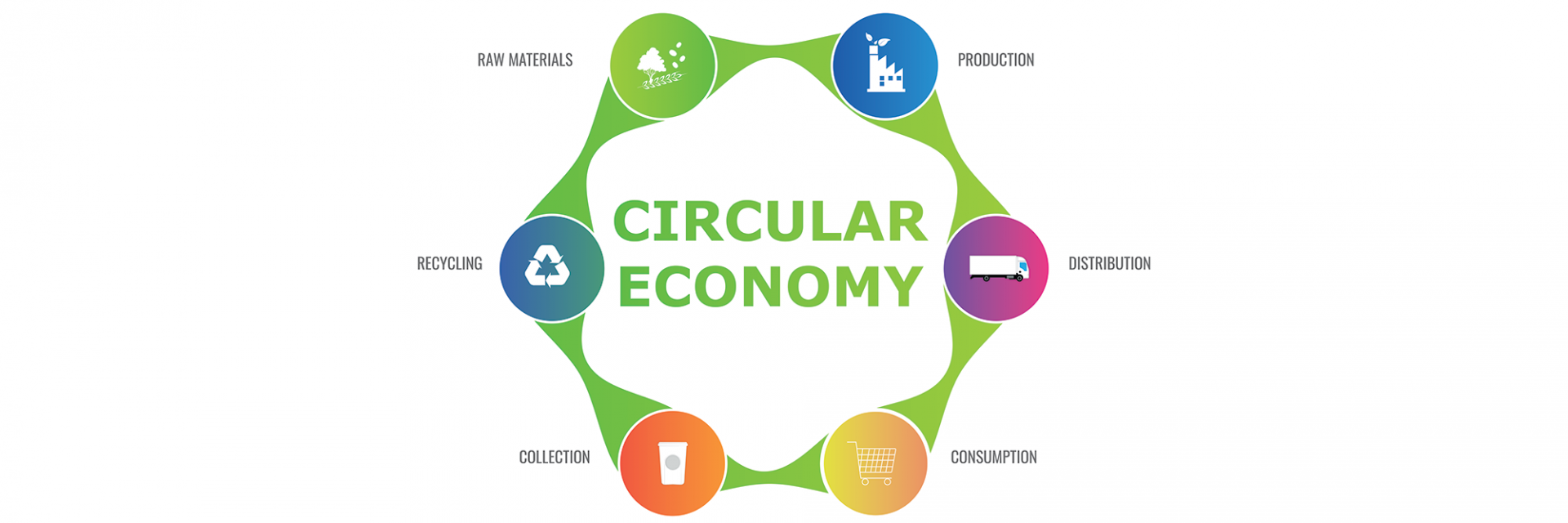
Harare, Zimbabwe, 19 October 2026 – The UN Economic Commission for Africa (ECA) applauds the importance of the work of the Common Market for Eastern and Southern Africa (COMESA) in promoting the circular economy as a driver of industrial transformation, value addition, and sustainable economic growth in Eastern and Southern Africa. Circularity is a source of many opportunities including those for business development and employment.
ECA participated in the Second COMESA Green Industry Connect Meeting at the 19th COMESA Business Forum and Exhibition held under the theme "Inclusive Industrialisation and Investment: Advancing Circular Value Chains in COMESA" in Harare, Zimbabwe. The meeting brought together policymakers, private sector leaders, financiers, development partners, and innovators to explore opportunities to advance circular business models and strengthen value chains in key sectors, including leather, textiles, plastics, and electronic waste. Regional stakeholders discussed practical strategies for strengthening circular production systems, attracting investment, and enhancing regional value chains to drive industrialization across COMESA Member States. The discussions underscored that the transition to circular and green industrialisation offers Africa opportunities to accelerate structural transformation while advancing sustainability objectives. They noted that through strengthening regional value chains in the leather, textiles, plastics, electronic and e-waste sectors, COMESA Member States can create jobs, attract investment, and retain greater value from the continent's resources.
The need for closer collaboration between ECA and COMESA in the support to Member States through coordinated programming, resource mobilization and capacity utilization was underlined. During side discussions, Mr Oliver Maponga, ECA Economic Affairs Officer, underlined the complementarity between some activities under the European Union-funded SWITCH to Circular Economy in Eastern and Southern Africa Programme being implemented by COMESA and the activities UNDA 17th Tranche Project on Innovative Climate Action to Accelerate Green and Inclusive Industrialization in the Southern African Region being implemented by SRO-SA and called for closer collaboration, knowledge sharing, and alignment to accelerate resource-efficient sustainable industrialization.
Opening the meeting, COMESA Secretary General H.E. Chileshe Mpundu Kapwepwe underscored the growing importance of circularity in shaping economic competitiveness and industrial resilience.
"Green and circular industry is no longer a side environmental agenda. It is fast becoming a condition for market access, investment and competitiveness."
The meeting forms part of broader efforts to realise the vision of the 25th COMESA Summit, themed "One Market, One Future: Advancing Inclusive Industrialisation, Investment and Regional Integration in COMESA." Participants highlighted the need to strengthen regional production networks capable of transforming Africa's abundant natural resources into higher-value products and services.
In his keynote address, Prof. Dr Amon Murwira, Zimbabwe's Minister of Foreign Affairs and International Trade, stressed the need to expand domestic processing capacity and improve resource efficiency so that the continent can derive greater economic value from its natural resources.
Discussions at the meeting identified significant opportunities in leather processing, plastics recycling, battery recovery, and electronic waste management as emerging sectors that can drive industrial growth, job creation, and innovation. Participants noted that circular economy approaches can simultaneously address environmental challenges while improving productivity and competitiveness across African economies.
Estimates presented at the meeting indicate that the circular economy could add up to US$4.5 trillion to the global economy by 2030 and create about six million net jobs worldwide. Participants noted that many opportunities remain untapped in Africa, especially in recycling, remanufacturing, repair, and resource recovery.
Speaking on behalf of the COMESA Council of Ministers, Hon. Lee Kinyanjui, Kenya's Cabinet Secretary for Investments, Trade and Industry, highlighted the region's strategic advantage in possessing critical minerals essential to the global energy and digital transitions. He noted that these resources offer opportunities not only for extraction but also for value addition through mineral beneficiation, battery component manufacturing, repair and refurbishment services, and recovering valuable materials from electronic waste streams.
Representing Hon. Kinyanjui, Ms Regina Ombam, Principal Secretary, said: "COMESA has already taken important steps to support this transition through the European Union-funded SWITCH to Circular Economy in Eastern and Southern Africa Programme. We are coordinating support for governance, finance, knowledge generation and capacity development in the plastics and packaging, and electronics and e-waste value chains." The SWITCH Programme seeks to support policy development, financing, technology adoption, and capacity building in key circular economy sectors.
Panellists also underscored that deeper regional integration and effective implementation of the African Continental Free Trade Area can significantly boost the competitiveness of circular industries in Eastern and Southern Africa and called on countries to invest in removing tariff and non-tariff barriers to facilitate trade.
"Africa can no longer afford to export opportunity in the form of raw materials but needs to deliberately introduce policies to support beneficiation and value addition at source as well as invest in circularity. Circularity provides a pathway to retain value, create decent jobs, foster innovation, and build globally competitive industries across the continent", the panellists observed.
The expected outcomes from the Harare meeting include stronger business partnerships, recommendations towards better access to finance for circular enterprises, improved access to technology transfer, and directions for the development of harmonised regional standards and policy frameworks, including extended producer responsibility mechanisms. These recommendations will be submitted to the 25th COMESA Heads of State and Government Summit on October 22, 2026, for consideration.
Media Contact
Bedson Nyoni
Senior Information Management Assistant
ECA Subregional Office for Southern Africa
Email: nyonib@un.org
Issued by:
Communications Section
Economic Commission for Africa
PO Box 3001
Addis Ababa
Ethiopia
Tel: +251 11 551 5826
E-mail: eca-info@un.org