By Tabitha Wanja
In Nairobi's sprawling Makadara estate, a young woman navigates uneven pathways balancing a big bag full of assorted vegetables on her head. Another bag strains through the length of one arm. Her toddler stumbles from time to time while avoiding rough patches, trying to keep pace beside her as they hurry towards the market where she must hustle for space to sell what she can for the day. Her face bears the strain of the worry around the pain in her growing belly and the thin frame of her toddler who recently barely made it alive from a bout of malaria.
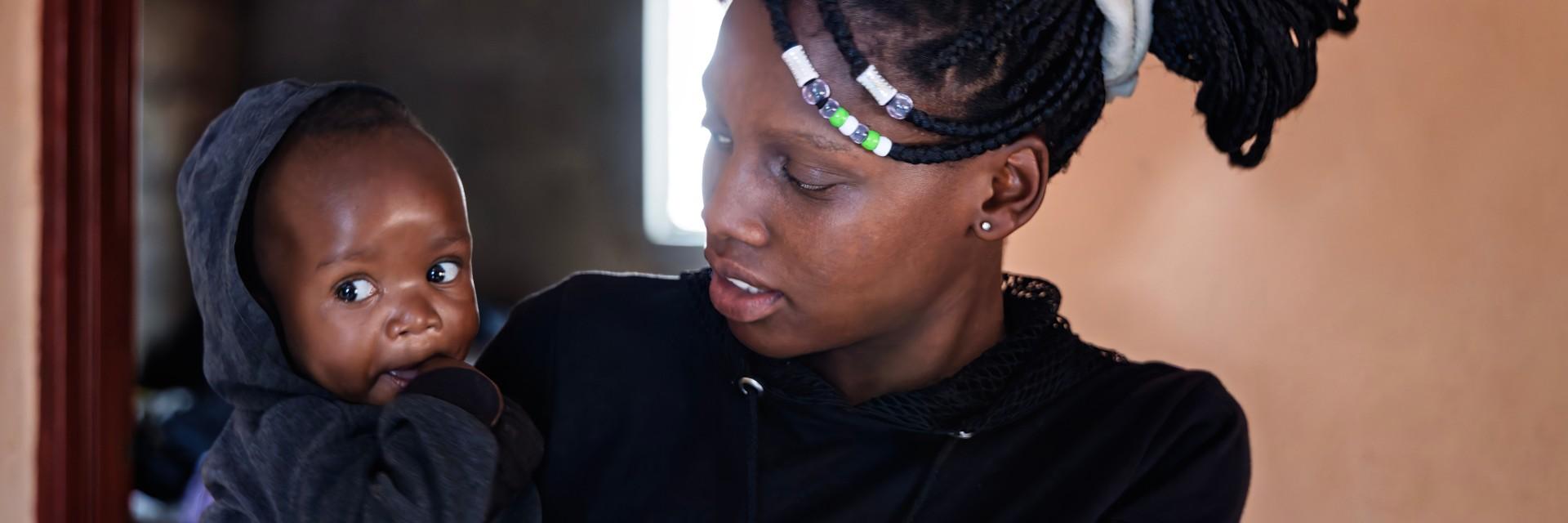
I recently spent weeks in Makadara and neighbouring Kasarin talking to pregnant and lactating women, the community health volunteers (CHVs) who visit them, and the nurses and midwives who deliver their babies. What I found were households absorbing a burden that used to belong to governments and donors and a health financing system failing, in small and large ways, the women and their children who need it most.
That scenario plays out across the continent, and according to the Economic Commission for Africa, Africa currently finances only 41% of its own health budgets. The shortfalls, as seen through the lived experiences of ordinary people expose the vulnerability of health care systems, with women and children absorbing the sharpest edge of it.
Take Kenya, for example, which has made strides in implementing an ambitious digitalization of the health sector, and a well defined vision aimed at affordable health care even for those in vulnerable situations. The country’s health budgets are financed primarily by national and county governments through taxation. Individuals are taxed to access Social Health Insurance Fund (SHIF), mandatory contributions from those in formal employment. The challenge, not only for Kenya and most African countries, is how to provide affordable insurance for those in the informal sector - the kind hustling their way to make ends meet on a daily basis, with no assurance of a regular income.
According to Policy Brief No. 5 of 2025 by the National Council for Population and Development, government budget allocation to health currently stands at just 3% of the national budget, far short of the 15% Abuja target.
Donor funding, once a major pillar of Kenya's health financing, took a further hit when USAID scaled back its support in early 2025.
Among the women I spoke with, the same pressures kept resurfacing, tangled together in ways that defied tidy categories of social, economic and psychological hardship.
The family structure itself is being reshaped. Many households are cut off from extended family, having moved to the city to make a living, and now navigate loneliness and disappointment with little support. This is often accompanied by a cost to their mental health. Many pregnant and lactating mothers no longer have their own mothers or mother figures to guide them through motherhood as earlier generations did, and their partners are often just as absent, drawn into menial, time-consuming work that leaves little room for family life.
That absence has an economic root. Most families depend on the gig economy, and with little formal education, women typically take up household work such as laundry, cleaning, or childcare on terms set unilaterally by employers. They are often in poorly paid, non-negotiable exploitative arrangements. The same economic strain drives some men to abandon their partners altogether, out of a sense of inadequacy amid the rising cost of living and scarce employment. One woman I met returned home after childbirth to find her husband gone for good.
It is the youngest mothers who bear the worst of it. I met an underage mother, then in her final year of high school, who took a job to supplement her mother's meagre income, only to be sexually exploited by the man who offered it. When she discovered she was pregnant, she hid it from her mother and sought an abortion that nearly killed her. Once her mother found out, she was thrown out of the house and the man responsible had long since disappeared. She was taken in by friends for several months until her mother tracked her down, and the two reconciled shortly before she gave birth. Most young mothers are not so fortunate . Many are abandoned by their families and left to raise children alone.
None of this stays outside the clinic doors. Health-seeking behaviour is compromised because most cannot pay for care. Even those who dutifully pay into SHIF, the very scheme meant to guarantee universal coverage, find public facilities offering little beyond consultation, which forces them to seek imaging, medication and other services elsewhere at costs they often cannot afford.
Nutrition compounds the problem: despite guidance from healthcare providers on the food groups needed for a healthy pregnancy, many women cannot afford to follow it, and a significant number are diagnosed with anaemia and told to buy blood-boosting supplements that are either too costly or carry side effects such as nausea and vomiting, especially on an empty stomach, a condition many of these mothers already live with.
The cumulative toll is psychological as much as physical. Placed in situations this precarious, some women are lured into sexual exploitation for financial gain. Others turn to petty crime such as shoplifting to get by, leaving them carrying guilt and shame, deepening their vulnerability rather than relieving it.
The community health volunteers tasked with ensuring mothers get proper care are themselves underpaid, irregularly paid, and without formal medical training. Expected to monitor the hygiene, diet and general welfare of the women assigned to them, they must also take on side jobs to survive, work that eats into the time meant for their clients.
CHVs face additional strain from mothers who avoid clinics altogether, having lost trust in facilities for the reasons outlined above. With teenage and young mothers in particular, CHVs are sometimes forced to personally accompany them to appointments and repeatedly remind them to take their supplements, filling a guidance gap many of these girls lack at home.
Beyond the CHVs, nurses and midwives are central to maternal welfare, both before and after birth, a role whose complexity is easy to underestimate, particularly in communities where women have little power over their own circumstances.
The hygiene and dietary advice given in clinics is often delivered as a formality, with providers well aware that only a small fraction of patients can realistically follow it. Water, essential to any hygiene routine is scarce and heavily rationed even when it reaches the taps.
Mothers, for their part, expressed little faith in healthcare providers, whom they accused of being out of touch with their circumstances. Many pointed out that they had fallen pregnant while using family planning methods they had been assured would prevent conception until they were ready.
Healthcare facilities were also seen as ill-prepared for emergencies such as post-delivery haemorrhage. Most health centres in these areas lack the capacity for complex procedures like caesarean sections, and when referral is needed, ambulances to reach better-equipped facilities are often unavailable.
Easing this burden will take more than a bigger topline health budget. It requires interventions that match the specific ways the system fails these women. With Africa currently financing only 41% of its own health budgets
There are, however, reasons for cautious optimism. In April 2026, the UN Economic Commission for Africa (ECA) used its 58th Conference of African Ministers of Finance, Planning and Economic Development in Tangier, Morocco, to formally launch the Sustainable Health Financing Initiative — branded "Transforming Health Financing in Africa" — alongside the Tangier Declaration on Sustainable Health Financing. Echoing the discussions was the recognition that health is not expenditure. It is investment in people, in productivity and in prosperity. Governments need to redesign financing systems, expand health insurance and risk-pooling, deepen private-sector engagement and build resilience.
The 15% Abuja target speaks directly to the problems uncovered in Makadara and Kasarani , which include chronic underfunding, fragmented insurance coverage, and health systems that quietly pass their costs on to households. For the policymakers, it offers both a language (health as sovereign investment rather than social burden ), and a concrete architecture for closing the very gaps my fact-finding mission exposed.
What can governments do?
-
Raise health allocations toward the 15% Abuja target on a binding schedule. This is not an aspirational ceiling. County allocations cannot continue to stall near 3%.
-
Make SHIF coverage meaningful, not just mandatory. Extend it beyond consultations to imaging, medication and maternal emergency care, so premium-paying mothers stop effectively paying twice for the same pregnancy.
-
Fund basic emergency obstetric capacity at primary and county facilities, stocked blood banks, functioning theatres for caesarean sections, and dedicated ambulances for referral so haemorrhage and complicated deliveries are not left to chance or distance.
-
Subsidise and diversify iron and nutrition supplements in public facilities , including better-tolerated formulations, so treatable anaemia stops being a recurring barrier to care rather than a one-time diagnosis.
-
Formalise and adequately pay community health volunteers, so they are not forced into side jobs that erode the time and trust they need to support the mothers assigned to them.
-
Invest in the quality of family-planning counselling and follow-up, closing the gap between what women are promised about contraception and what many of them actually experience.
Ultimately, the indignity of poverty compounds the suffering of women whose central preoccupation should be nurturing the next generation .It undercuts their productivity in their prime working years. Addressing the neglect of this population is urgent if any real progress is to be made.